

1. Factors leading to Mekong riverbank erosion: From sediment imbalance to riverbank encroachment
Mekong riverbank erosion is not an isolated phenomenon, but rather the result of many simultaneous influencing factors. Among them, two core mechanisms to understand are sediment imbalance and riverbank erosion.
1.1 What is sediment imbalance?
Sediment is the amount of alluvium, sand, and mud carried by the river and deposited along the banks. This is the “natural material” that helps maintain and reinforce riverbanks over time.
However, in recent years, the amount of sediment in the Mekong River has been sharply declining. The causes come from:
- Climate change altering flow regimes
- Hydropower dams retaining alluvium upstream
- Sand mining causing loss of riverbed material
When there is no longer enough sediment to compensate, the riverbanks gradually lose their “natural protection” layer, becoming more vulnerable to the effects of the current.
1.2 How does riverbank erosion occur?
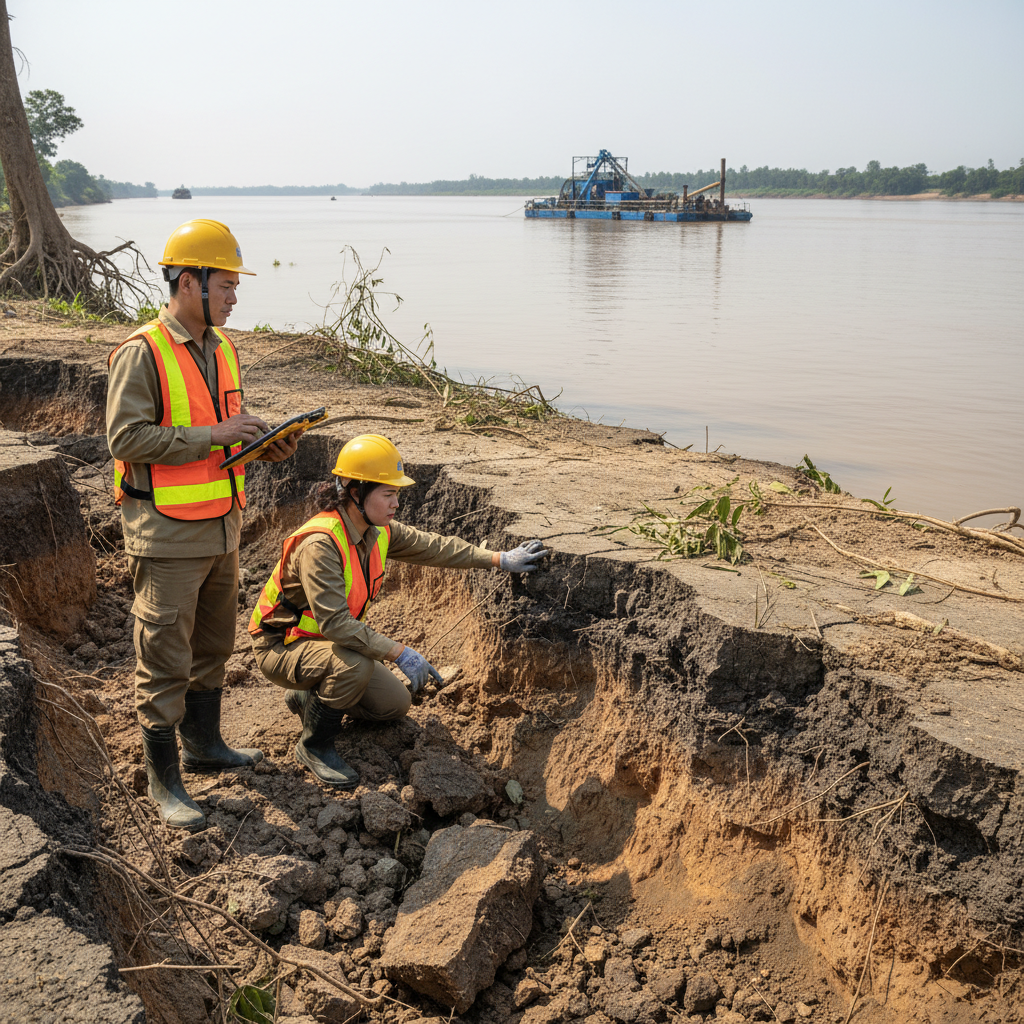
Erosion is the process by which water continuously “wears away” at the riverbanks. When the current is stronger or concentrated in an area, the force will wash away soil, causing the riverbanks to collapse in stages.
Factors promoting erosion include:
- Fluctuating flow due to hydrological changes (irregular wet – dry seasons)
- Abnormal water level changes due to dam operation
- Riverbed deepening due to sand mining → increasing flow velocity
According to a report by the Mekong River Commission, over the past 50 years, the temperature across the basin has increased by approximately 1.4°C, leading to significant changes in flow: higher dry season flows, lower wet season flows. At the same time, the operation of large dams like Xayaburi has caused river water levels to drop significantly, directly affecting sediment transport capacity and riverbank stability.
2. Consequences of Erosion for the Mekong landscape, infrastructure, and regional development
2.1 Pressure on riverine infrastructure and environment
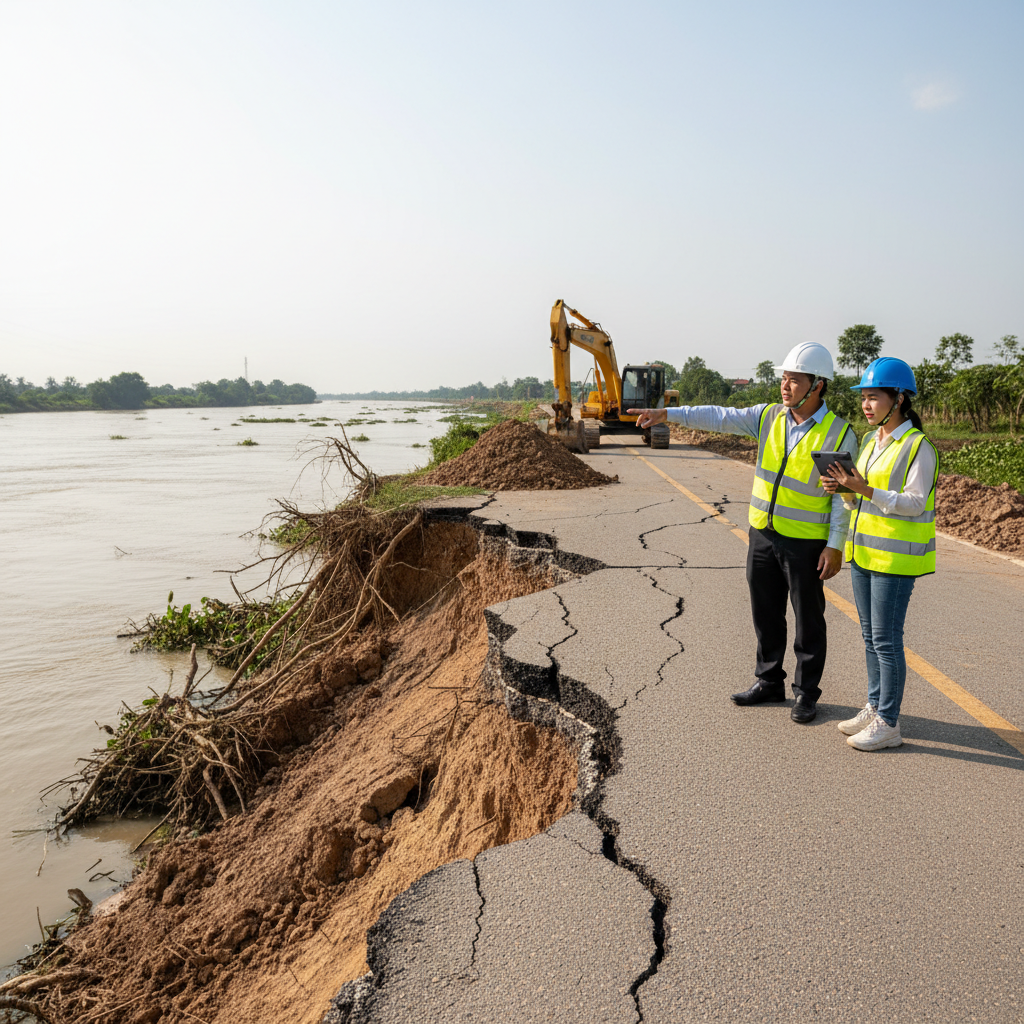
Erosion in the Mekong riverine areas is directly impacting operations, damaging infrastructure such as piers, roads, and functional zones for ecotourism. The annual deficit of approximately 25 million tons of sediment, due to both sand mining and retention in hydropower reservoirs across the Mekong River system, is a notable cause. The significant reduction in sediment passing through monitoring stations has led to increased riverbank instability and coastal erosion. Consequently, riverine agricultural land is shrinking, biodiversity is declining, and the risk of water source pollution is increasing due to the deposition of pollutants from eroded soil.
2.2 Financial risks and the decline in value of riverine projects
Erosion increases the risk of property, housing, and infrastructure loss, leading to significant costs for remediation and reconstruction. In the first 5 months of 2024, drought and saltwater intrusion caused over 50,000 households to lack access to clean water, and nearly 1,000 roads, houses, and bridges were severely affected. For ecotourism, the degradation of the riverine landscape and ecosystem reduces the destination’s appeal, directly impacting revenue and investment value.
Furthermore, many current bank protection solutions require high initial investment due to material and machinery costs. Financial pressure is further increased by the need for regular maintenance and repairs as structures degrade under the impact of currents, leading to high long-term overall costs but limited sustainable effectiveness.
2.3 Impact on communities and long-term development orientation
Riverine communities face the risk of losing land, reduced livelihoods, and issues related to safety and social protection. The burden of managing and implementing preventative and responsive solutions poses many long-term resource challenges. Evidence shows large-scale climate change adaptation projects have been implemented, such as the “Climate Resilience and Integrated Transformation of the Mekong Delta” project with a budget of over 200 million USD, and a project for the 2026-2031 period with a total cost of 375 million USD (of which 360 million USD from the World Bank). Without effective solutions, the Mekong region risks losing its ecotourism advantages, as well as facing difficulties in achieving sustainable development goals and climate change adaptation at regional and national levels.
3. Why do many current solutions still fail to solve the erosion problem?
Hardened revetment solutions using concrete and stone are still commonly applied to control riverbank erosion. However, in practice, this approach has many limitations:
- Disrupts the natural interaction between the river and the riparian ecosystem
- High construction and maintenance costs, especially for large-scale projects
- Effectiveness depends on initial structure, difficult to adapt when conditions change
In cases of strong fluctuations in flow, water levels, or weak soil foundations, structures can rapidly degrade, increasing long-term costs.
Conversely, solutions based entirely on plants, such as planting grass or greening river slopes, are also insufficient to address the problem in the Mekong. The reasons stem from complex hydrological conditions:
- Strong currents and large waves easily wash away the initial cover
- The time required for a root system strong enough to hold soil is relatively long
- Prolonged flooding affects plant growth capacity
Therefore, this group of solutions often does not meet short-term protection requirements, especially in areas with high erosion risk.

4. Vegetation Mat from Mekonglink: Riverbank stabilization solution adapting to the “hungry water” effect
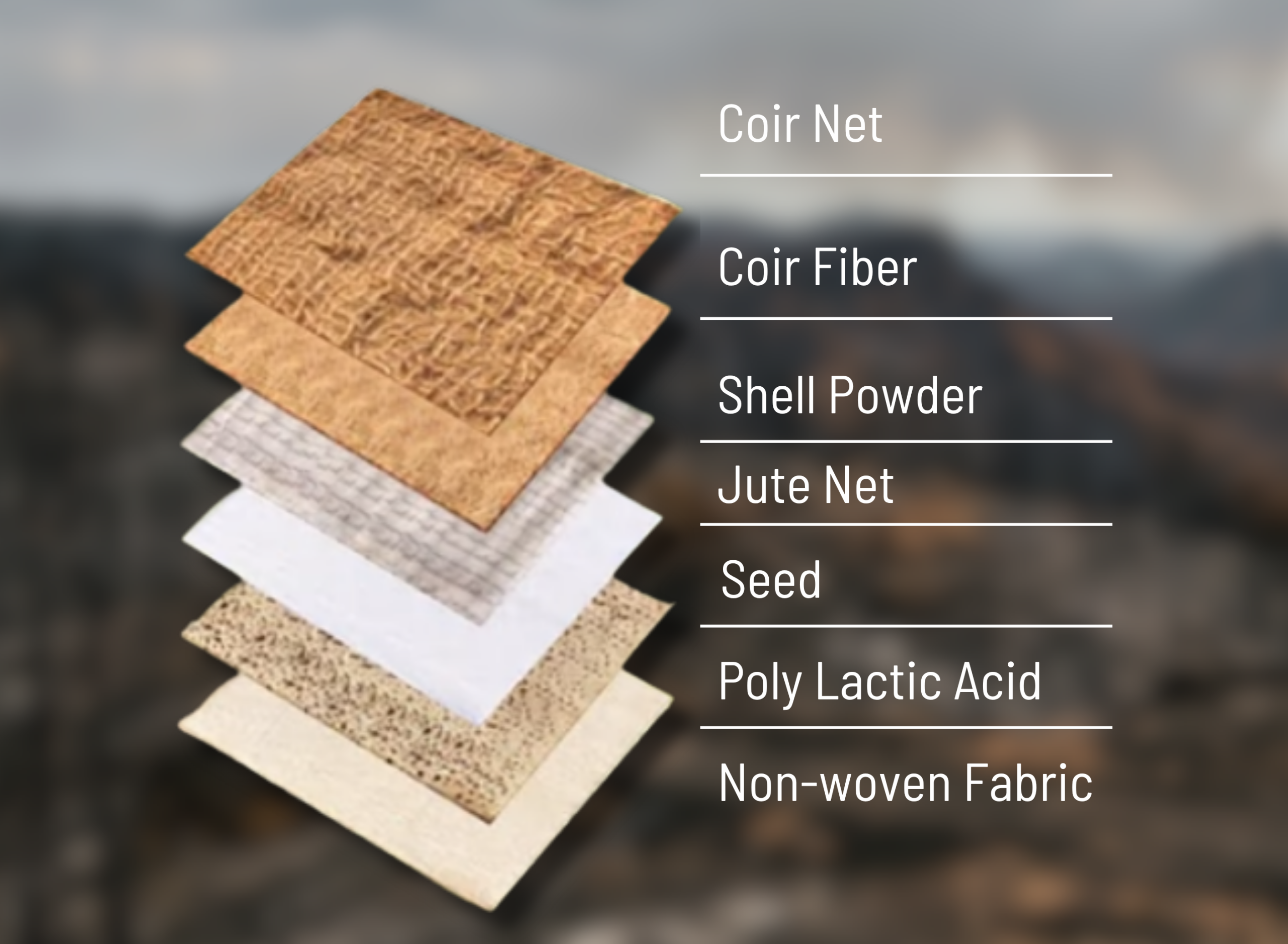
The application of advanced biological vegetation mats based on natural and biodegradable materials is bringing positive changes to areas with steep terrain or easily erodible riverbanks. The structure of the vegetation mat allows for the integration of native plant seeds into the mat, thereby promoting stable germination and plant development, playing a crucial role in forming a sustainable soil-binding root system.
The sequential decomposition mechanism of the mat also helps provide additional nutrients to the soil environment, aiming to regenerate natural ecosystems and enhance resilience against external impacts such as heavy rain and floods. This solution is recognized by many international organizations, research institutes, and industry associations as an environmentally friendly bioengineering model suitable for adapting to the specific climate of the Mekong region.
5. Why are Biological Vegetation Mat Solutions Suitable for Public and Community Projects?
5.1 Supporting environmental and sustainable development goals
Biological vegetation mats are a green solution that meets standards for using environmentally friendly materials and promotes the development of native plants suitable for the application area. This characteristic helps public projects comply with environmental protection regulations and emission reduction targets in national sustainable development agendas. Choosing a biological solution facilitates transparency for management agencies in investment decisions regarding both environmental criteria and synchronized green social development goals.
5.2 High practical applicability and adaptability
Initial survey and research activities in the Dong Thap and Tien Giang regions are being carried out to assess the applicability of biological vegetation mats in the actual conditions of the Mekong region. Through understanding the current state of terrain, hydrology, and erosion levels, stakeholders are initially identifying the potential of the solution in supporting slope and riverbank stability.
For management agencies and infrastructure development units, a survey-and-assessment approach before implementation helps minimize risks while ensuring the selection of solutions appropriate to local conditions and long-term goals.

6. Sustainable Solution for Mekong Erosion: Combining Technology and Ecosystem Management
The situation of erosion and landslides along the Mekong River is causing serious consequences, from economic damage to the loss of natural landscape beauty and threats to community livelihoods. The root causes stem from climate change, upstream activities, and unsustainable exploitation. Although many traditional solutions have been tested, they often fail to meet the requirements for sustainability, cost-effectiveness, and harmony with the region’s unique environment.
Applying advanced solutions, especially biological vegetation mat technology, combined with integrated basin management and community participation, is an essential direction to protect and restore the Mekong riverine areas. This approach not only effectively reinforces riverbanks but also regenerates ecosystems, preserving and enhancing sustainable value for ecotourism zones.
👉Contact Mekonglink HERE to get riverine landscape conservation solutions for your ecotourism project!
———————–

☎️ Contact Information:
1. Email: Community@mekonglink.asia
2. Website: mekonglink.asia
3. International Phone: (+84) 02888868685
4. Vietnam Phone: (+84) 364689922 (+84) 364689911


Responses