

1. Why are AIoT Energy Monitoring Solutions different from traditional monitoring systems?
In a hospital environment, energy monitoring is not just about tracking total electricity consumption, but also requires deep analytical capabilities and proactive control. AIoT Energy Monitoring Solutions (EMS) differ in the following ways:
- Comprehensive data analysis: EMS collects and analyzes data from HVAC, medical equipment, lighting, and auxiliary systems, helping hospitals clearly see consumption levels by area and time. According to Integrity Energy (2024), real-time monitoring helps detect unreasonable operating points more effectively than traditional methods.
- Proactive identification of savings opportunities: The system uses historical data and analytical algorithms to identify areas of energy waste, thereby proposing optimization. Spacewell (2024) shows that EMS can help reduce waste through HVAC and lighting optimization.
- Control and automatic adjustment: Beyond monitoring, AIoT EMS can control large consumption systems based on actual needs and peak hours. Lawler Consulting (2024) notes that real-time control helps generate immediate savings.
- Flexible deployment, suitable for 24/7 environments: EMS is designed to integrate with existing infrastructure without disrupting hospital operations. Advantech (2024) emphasizes that the system is suitable for the continuous operational nature of medical facilities.
- High reliability and continuous operational support: EMS continuously monitors electricity, gas, water, and steam, helping ensure energy stability for essential medical services. ABB (2023) notes that this solution can help reduce energy costs by up to 10% annually through control and predictive maintenance.
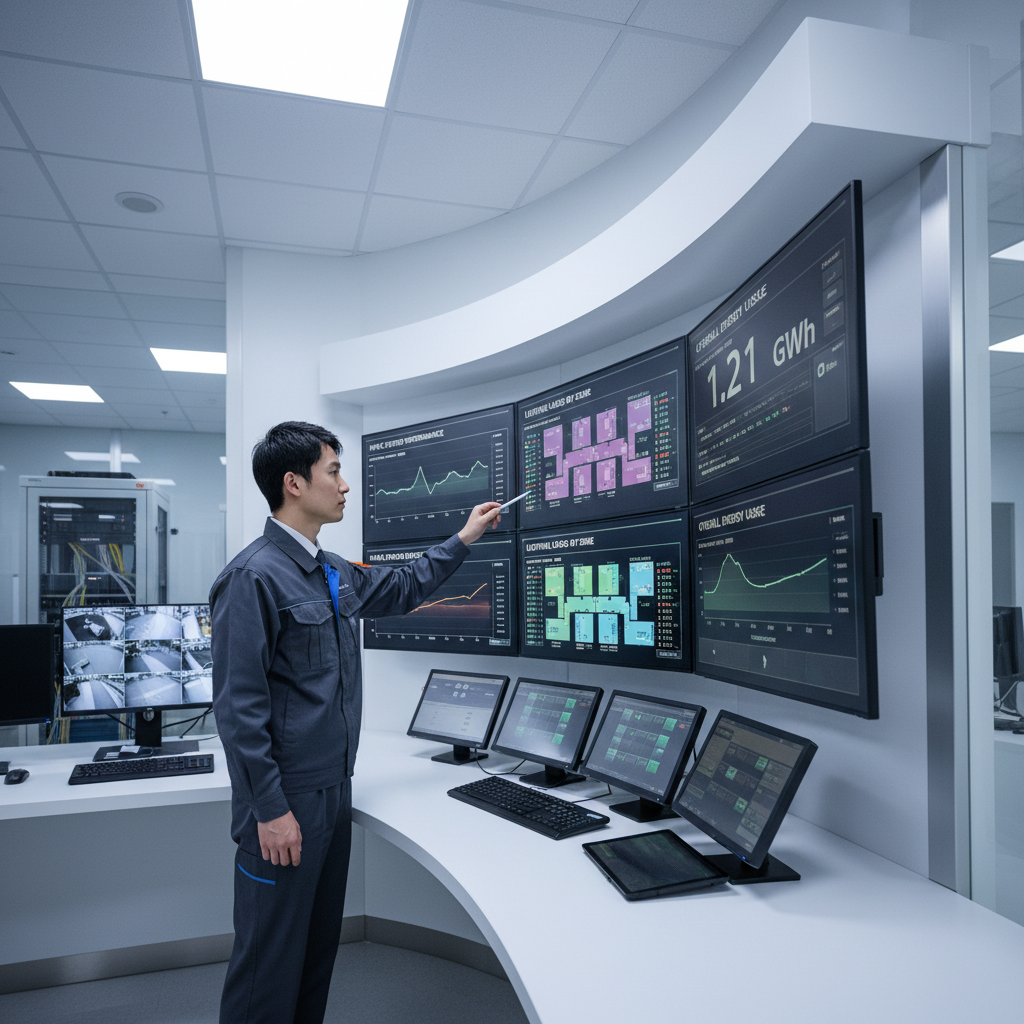
2. How do AIoT Energy Monitoring Solutions operate in a hospital environment?
In hospitals, Energy Monitoring Solutions (EMS) operate in a closed-loop process from data collection and analysis to automatic control. The entire system can be expanded with an AIoT-based smart temperature management system for smarter temperature management.
2.1 Real-time data collection and monitoring
AIoT EMS uses a network of sensors and measurement devices installed in areas of high energy consumption such as HVAC, medical equipment, and lighting systems.
Data is collected in real-time and transmitted to a central system, allowing for continuous monitoring of energy consumption throughout the hospital.
According to tekWorx (2024), real-time monitoring helps detect operational anomalies promptly and enables immediate adjustments to limit waste.
2.2 Data analysis and decision-making support
After collection, data is processed by the central operating software. The system uses analytical algorithms to:
- Identify power consumption patterns
- Alert anomalies
- Identify areas or equipment with high energy consumption
According to Integrity Energy (2024), EMS not only analyzes but also supports reporting, equipment management, and automatic control of HVAC and lighting to optimize operations.
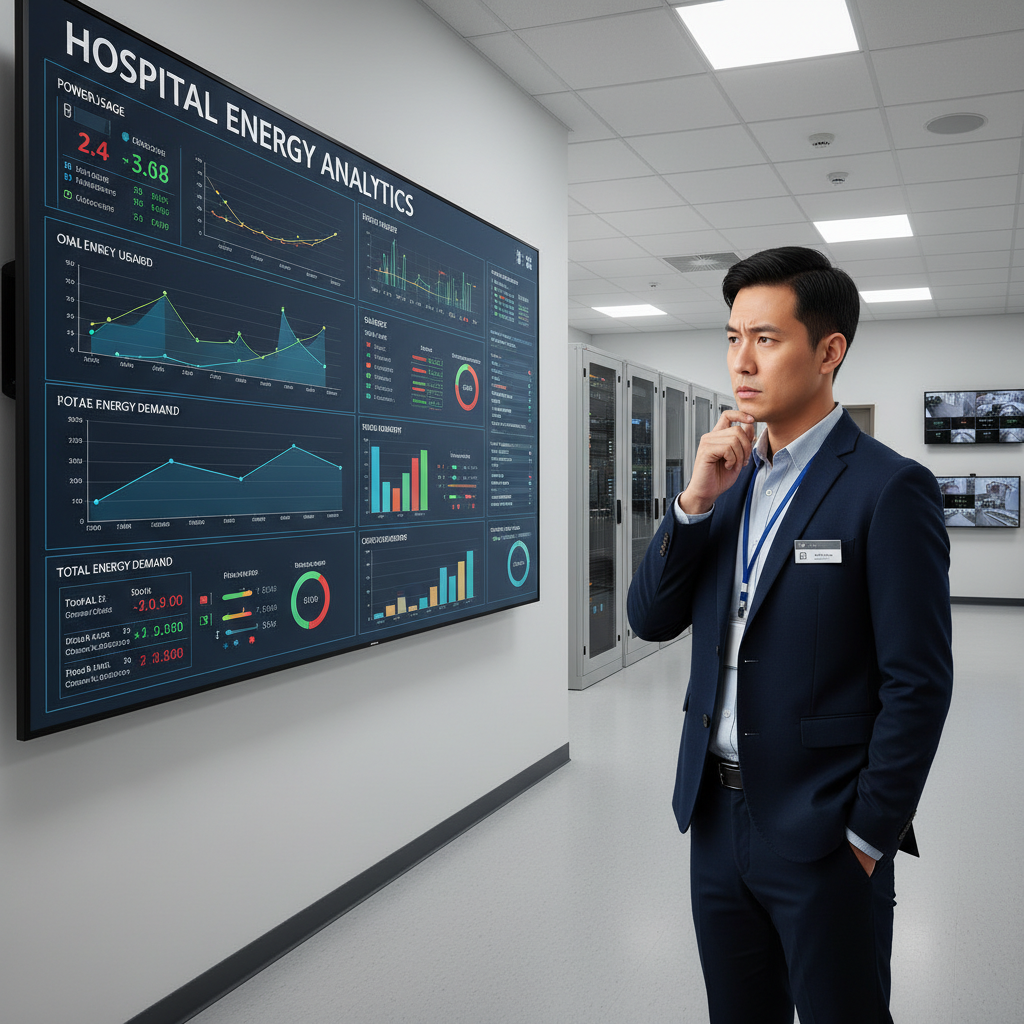
Intuitive dashboards and real-time alerts help energy managers quickly understand data and make appropriate decisions. Atrius (2024) notes that EMS can detect inefficiencies that traditional monitoring methods struggle to identify.
2.3 Automation and operational optimization
Automation is the core mechanism that enables EMS to surpass conventional monitoring systems.
The system can automatically adjust HVAC, lighting, and electrical equipment based on:
- Usage time
- Weather conditions
- Actual area status
According to tekWorx (2024), automation helps optimize electricity consumption while reducing reliance on manual operations by staff.
2.4 Performance comparison and continuous improvement
EMS also supports benchmarking, allowing hospitals to compare energy consumption with industry standards or with comparable facilities.
This comparison helps clearly identify:
- Wasteful areas
- Optimal performance standards
- Long-term improvement priorities
TekWorx (2024) argues that benchmarking is the basis for setting realistic savings goals and improving operational efficiency.
2.5 Advanced Analytics Applications (AI & Machine Learning)
Beyond measurement and automation, many modern AIoT Energy Monitoring Solutions integrate artificial intelligence and machine learning to enhance anomaly detection and savings opportunities.
According to NIH PMC (2023), implementing EMS can increase hospital energy efficiency by up to 36%, despite relatively high initial investment costs. Thanks to this mechanism, hospitals can shift from a “passive monitoring” model to “proactive and smart energy management”.
3. Core benefits of implementing AIoT Energy Monitoring Solutions
Implementing Energy Monitoring Solutions in hospitals brings direct value in terms of operations, finance, and energy system management. These benefits focus entirely on electricity management, HVAC, and technical infrastructure.
3.1 Operational Benefits
AIoT Energy Monitoring Solutions help hospitals control energy consumption transparently and systematically.
First, the system helps reduce energy costs by closely tracking consumption levels by area, especially for high-electricity consumption items such as HVAC, cooling systems, lighting, and technical equipment. Once waste points are clearly identified, hospitals can make timely adjustments to limit unnecessary consumption.
Second, EMS helps improve overall operational efficiency. Thanks to real-time monitoring, anomalies in HVAC or electrical systems can be detected early, reducing the risk of failures and ensuring stable operation.
In addition, continuous monitoring helps increase the reliability of technical infrastructure. The system supports early warnings and predictive maintenance, limiting disruptions in the hospital’s 24/7 operating environment.
3.2 Financial and management benefits (Business Benefits)
From a management perspective, AIoT Energy Monitoring Solutions help hospitals optimize long-term operating costs.
Controlling electricity consumption by zone allows for more accurate budget allocation and improves the ability to forecast monthly or annual electricity costs.
When HVAC and large consumption systems are automatically controlled and optimized according to actual needs, electricity consumption directly decreases, thereby improving operating profit margins.
Furthermore, EMS also helps hospitals meet state-regulated electricity saving requirements, reducing legal compliance risks and pressure from energy saving programs.
3.3 Benefits for Technical Operations Team (Facility & Engineering Benefits)
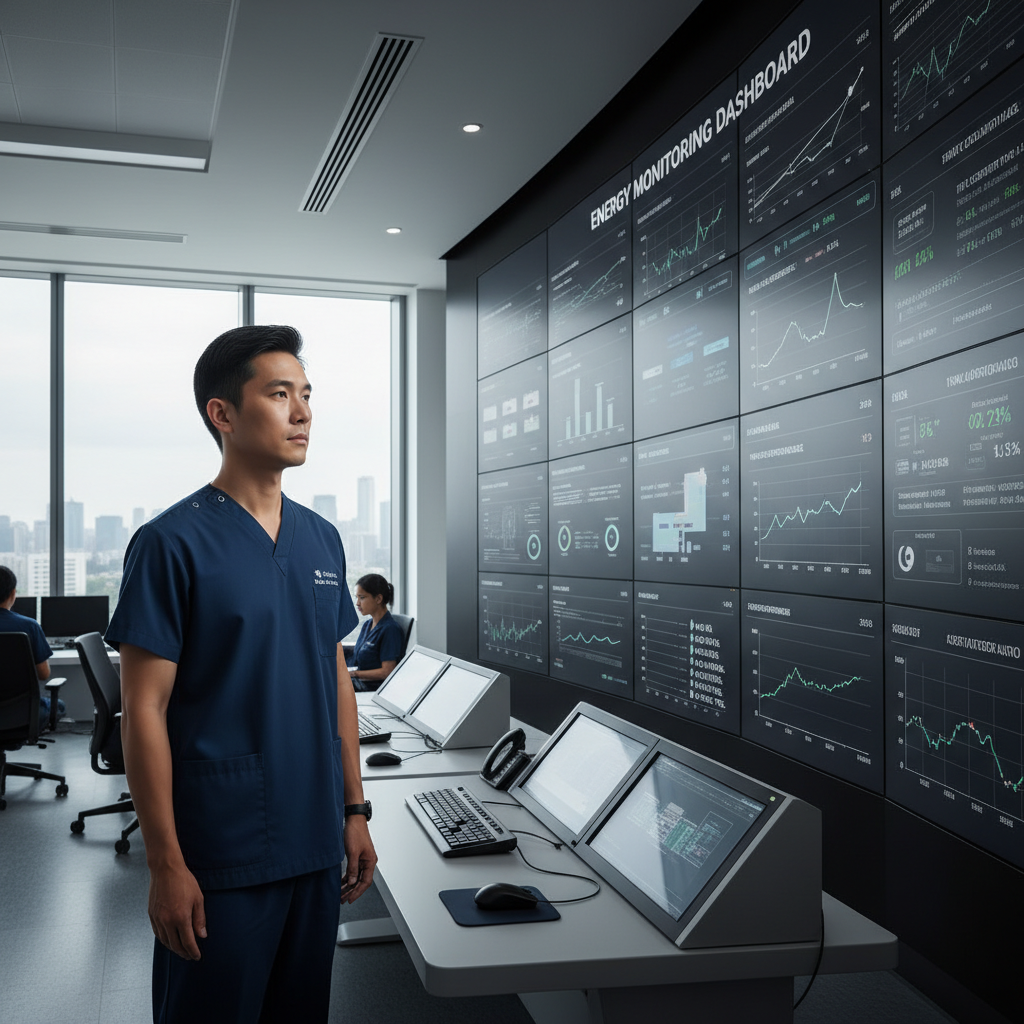
AIoT Energy Monitoring Solutions provide a centralized, intuitive, and easy-to-monitor management interface for the technical department.
Instead of manually checking each system, the operations team can monitor all electricity and HVAC data on a single platform. Automatic alerts help reduce troubleshooting time and increase response speed.
Additionally, the ability to analyze energy consumption trends helps the technical team proactively plan maintenance, optimize equipment, and improve operational efficiency in each phase.
4. Why do AIoT Energy Monitoring Solutions help hospitals comply with Directive 20/CT-TTg?
According to Directive No. 20/CT-TTg dated June 8, 2023, large energy consumers in Vietnam, including hospitals consuming 1 million kWh/year or more, are required to save at least 2% of total electricity consumption each year or reduce electricity consumption by 2% per unit of product. This is no longer a recommendation but a supervised enforcement requirement.
In the first 6 months of 2025, EVNNPC recorded savings of over 1.165 billion kWh, demonstrating the serious implementation of the directive across the entire system. The series of directives issued continuously from 2020 to date also reflects the Government’s long-term orientation for electricity savings in the 2020–2025 period and subsequent years.
In this context, AIoT Energy Monitoring Solutions play a foundational role in helping hospitals proactively meet legal requirements. The system allows for measuring electricity consumption by area, tracking savings progress in real-time, identifying waste points, and providing transparent data for reporting. Instead of passively managing electricity costs, hospitals can control and demonstrate achieved savings, ensuring systematic and sustainable compliance with Directive 20/CT-TTg.

5. Effective implementation cases of AIoT Energy Monitoring Solutions
AIoT Energy Monitoring Solutions can bring effectiveness to various healthcare facility models, from large-scale hospitals to small clinics. The level of savings and operational optimization depends on the system’s scale and implementation approach.
- For large general hospitals, the wide operational scope with many functional areas such as operating rooms, inpatient wards, technical areas, and administrative offices makes energy cost control complex. Implementing EMS allows for centralized monitoring of the entire electricity consumption system and optimization by area. In fact, Cleveland Clinic saved approximately $537,500 in utility costs annually by implementing EMS. Similarly, the University of Pittsburgh Medical Center (UPMC), with its network of 20 hospitals, used EMS to uniformly manage energy across the entire system, ensuring stable operations and cost optimization.
- For specialized hospitals, where many large electricity-consuming devices such as CT, MRI, and X-ray machines are used, controlling energy by equipment group is a key factor. A 2024 report shows that EMS can help increase energy efficiency by up to 36% when simultaneously monitoring and controlling equipment, HVAC, and lighting. In Brazil, Pari Jussara General Hospital improved energy efficiency by 14.9% and saved nearly $45,314 during the EMS implementation phase, focusing on HVAC and online monitoring systems.
- For small-scale clinics, the goal is often to save operating costs from basic items such as lighting, air conditioning, and general electrical equipment. EMS allows direct monitoring of these items and adjustments based on actual needs. Recent studies show that healthcare facilities can reduce energy costs by 10–30% through monitoring and optimizing HVAC, lighting, and electrical systems. Another example, Harris Integrated Solutions reduced electricity consumption by 27% at a medical building, resulting in approximately $500,000 in savings in the first year.

It can be seen that the energy monitoring solution combined with AIoT is a powerful tool to help hospitals save energy, reduce costs, and improve operational efficiency. With deep data analysis capabilities, proactive control, and easy deployment, EMS is an ideal solution for hospitals looking to optimize energy usage and achieve environmental goals.
👉 Contact Mekonglink now to implement an energy management system for your hospital.
Learn more about the AIoT-based smart temperature management system here!
———

☎️ Contact information:
1. Email: Community@mekonglink.asia
2. Website: mekonglink.asia
3. International phone: (+84) 02888868685
4. Vietnam phone: (+84) 364689922 (+84) 364689911


Responses