

1. How is the AIoT temperature management system different?
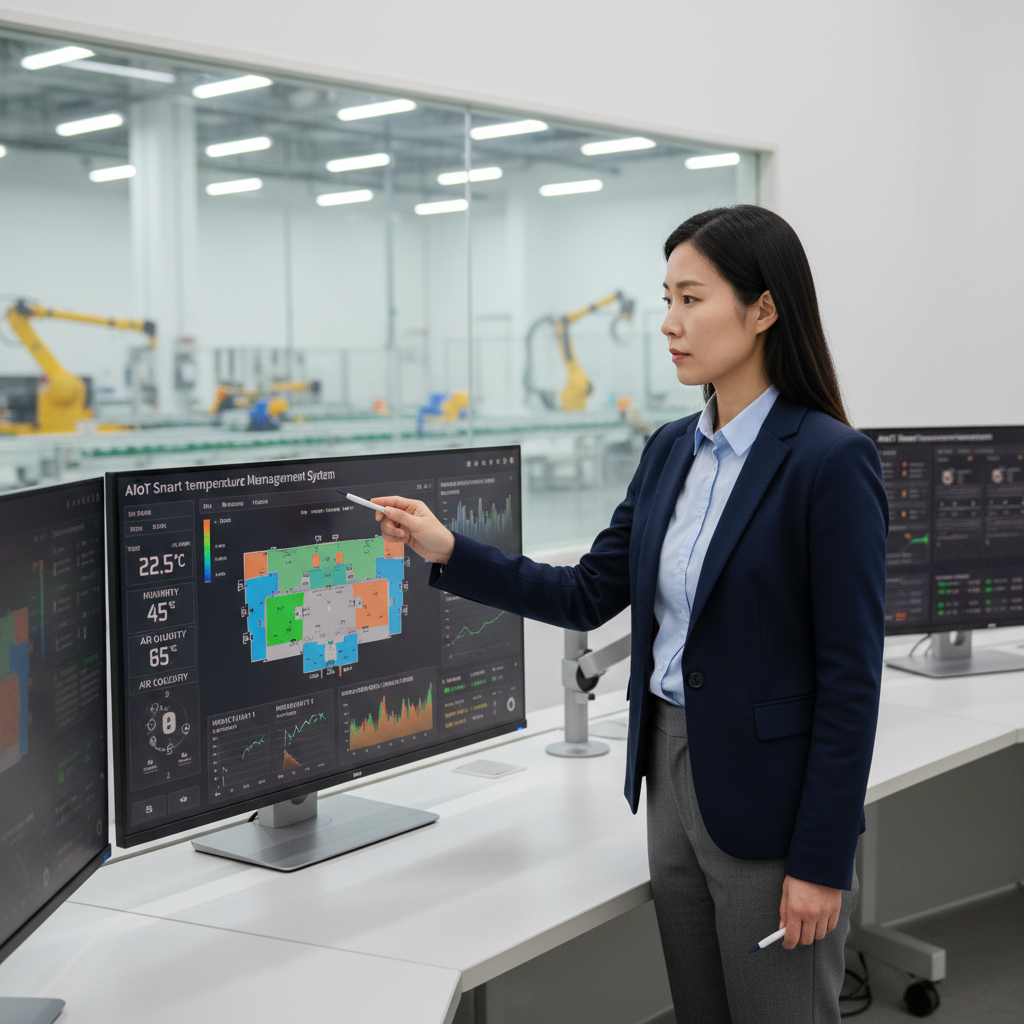
The AIoT smart temperature management system creates a significant shift from traditional HVAC control models by integrating data, automation, and centralized management capabilities. One of the distinct differences is that the system uses sensors to continuously collect temperature, humidity, and other environmental parameters from multiple locations within a space. This data is transmitted to a central platform in real-time, facilitating proactive and uniform control management, instead of relying on subjective on-site perceptions. This instant monitoring helps detect environmental changes quickly, increasing flexible response capabilities. The IoT smart temperature sensor system not only monitors remotely but also updates in real-time through mobile applications and remote control software.
The AIoT system also allows simultaneous control of multiple HVAC devices from a single platform, supporting chain operations with multiple air conditioners, reducing complexity, and saving time. The entire operation process, such as turning on/off and adjusting modes of individual devices or groups of devices, is performed remotely via a centralized interface, no longer requiring direct management at each location. Additionally, AIoT facilitates real-time monitoring of machinery performance, contributing to reduced downtime and operating costs for businesses.
A major differentiating value of AIoT is its ability to schedule and optimize operations based on real-time sensor data rather than just default timeframes. This process allows the system to automatically adjust temperatures according to environmental conditions, for example, increasing the temperature when a space is empty and lowering it when there are many customers to maintain comfort. This approach helps reduce energy waste and avoid excessive operation.
2. System Operation Mechanism
The AIoT temperature management system operates through the integration of sensor hardware layers, edge processing, and a central software platform. A system typically comprises four layers: the sensor layer (measures temperature, humidity, power), the edge processing layer (data pre-processing, local storage, protocol conversion, edge AI for anomaly detection), the cloud platform (receives data via MQTT/Kafka brokers, stores time-series data, provides alerting tools and rules), and the application layer.
1.1 Environmental Data Collection
Temperature and humidity sensors are the foundation for collecting real-world data. These sensors continuously measure environmental conditions, convert them into electrical signals, and send them to central edge devices. These steps ensure that data is centralized and transmitted stably to the cloud platform for analysis. Sensors and devices play a key role in data collection and enable real-time monitoring and operation within the AIoT Temperature Management System.
1.2 HVAC Device Control
The edge processing layer connects to air conditioner control devices via suitable modules, allowing the AIoT Temperature Management System platform to send direct control commands based on established algorithms and rules. According to Dev.to’s analysis (2024), the Edge Layer ensures that control operations such as turning HVAC devices on/off and adjusting their parameters are performed instantly, while also supporting anomaly detection and processing thanks to edge AI computing capabilities.
1.3 Central AIoT Platform
The software platform functions as the central brain, responsible for receiving, storing, and analyzing all real-time environmental data from all measurement points. Systems like the AIoT temperature management system provide a range of functions: monitoring current and past temperature and humidity, remote control of HVAC devices, flexible operation scheduling, configuring automatic control scenarios based on control thresholds for management, monitoring, and control features to serve operational management and space optimization.
With the continuous coordination of hardware – edge – software platform layers, this operating mechanism ensures that the environment is always strictly controlled, quickly responsive to fluctuations, and supports automation, thereby aiming to optimize operations and control energy consumption.

3. Core Benefits for Coffee Chains
The operational benefits of applying the AIoT smart temperature management system to coffee chains are evident through the ability to reduce electricity costs by optimizing HVAC operations based on real-time data and automating control stages. This helps limit unnecessary electricity consumption, especially during off-peak hours or when stores are empty, creating a foundation for standardizing temperature-humidity control processes at all sales points.
This synchronized control reduces discrepancies between stores, providing a consistent customer experience while minimizing human error in manual operation, such as forgetting to turn off machines or suboptimal adjustments. When employees are no longer required to manually intervene with air conditioners, they can focus more on customer service tasks, while middle management reduces the workload related to equipment operation and manual monitoring.
From a business perspective, a consistently stable and comfortable temperature environment helps increase customer dwell time and raises the probability of customers returning to the store, especially in the hot and humid climate of the Southern region. Coffee chains can also move closer to their sustainable development goals by reducing HVAC electricity consumption, contributing to carbon emission reduction and building a brand image aligned with ESG standards. This implementation is perfectly suitable for expansion, as the technology does not require major infrastructure modifications, allowing chain replication to proceed smoothly while maintaining good control over operating costs.
From a user perspective, such as managers or staff, the intuitive nature of the AIoT platform allows for remote monitoring and adjustment of devices without requiring direct presence at the store, which is convenient for multi-location operations and quick responses to fluctuations at each site. The entire operation process is fully data-logged, helping managers retrieve electricity consumption metrics and system performance, and reducing customer complaints about unsuitable temperatures, thereby enhancing transparency and data-driven decision-making capabilities.

4. Real-world Implementation Cases and Demonstrated Effectiveness
The real-world implementation of AIoT-based smart temperature management systems across numerous locations in the retail and F&B sectors has clearly demonstrated effectiveness in energy savings and operational optimization. Practical observations show that applying AIoT solutions not only leads to reduced energy costs but also helps businesses better control equipment operations and minimize unscheduled downtime.
According to EVN – 2024, in a real-world trial at nearly 20 locations, the AI-controlled temperature system recorded an average electricity saving of 10%. Additionally, the application of AIoT enables real-time monitoring of device operations, helping reduce downtime and maintenance costs, while extending asset lifespan and increasing reliability.
AIoT solutions also leverage daily usage data, analyzing equipment operation history to provide appropriate adjustment suggestions for each facility, helping maximize energy savings based on actual habits. In addition to the ability to track electricity consumption on the system, users can proactively adjust their usage habits thanks to suggestions from AI integrated into the AIoT platform. Beyond managing temperature devices, this platform extends to automation systems, such as automatically adjusting lighting or switching off devices when no human presence is detected, helping to maximize operational cost optimization.
These real-world implementation results demonstrate that the energy-saving effectiveness of the AIoT system is consistent across various retail formats, and simultaneously proves its ability to support proactive equipment operation management based on artificial intelligence and IoT platforms.

The AIoT-based Smart Temperature Management System offers a comprehensive solution for coffee chains, thoroughly addressing the challenges of power management and maintaining a comfortable environment across multiple stores. With its real-time data monitoring, centralized control, and sensor-based automatic optimization capabilities, this system not only cuts operating costs but also enhances customer experience and supports sustainable development goals. This is a significant step forward in integrating smart technology into facility management, helping F&B businesses in Ho Chi Minh City, Binh Duong, Long An, Tay Ninh, Tien Giang achieve outstanding efficiency.
To determine the actual impact of smart temperature management solutions in saving electricity and enhancing operational efficiency for coffee chains, managers can proactively participate in a PoC (Proof of Concept) program with Mekonglink’s AIoT-based Smart Temperature Management System. This approach helps verify and measure results from the actual operating data of the business model itself, thereby making appropriate decisions for a sustainable energy management strategy.
———————————-

☎️ Contact Information:
1. Email: Community@mekonglink.asia
2. Website: mekonglink.asia
3. International Phone: (+84) 02888868685
4. Vietnam Phone: (+84) 364689922 (+84) 364689911


Responses