

1. Climate and operational differences: Challenges when introducing European agricultural technology into ASEAN
The differences between the agricultural environments of Europe and Southeast Asia lie not only in climate, but also in operational ecosystems and production structures. These factors create a significant gap between technology design and actual application conditions.
1.1 Tropical climate and pressure on technology systems
Most agricultural technologies in Europe are developed based on temperate climate conditions, whereas many ASEAN countries have a tropical monsoon climate with high temperatures year-round, strong solar radiation, and persistently high humidity.
These factors put significant pressure on the materials, electronic, and mechanical systems of imported equipment. In many cases, systems may exceed the assumed operating conditions in the original design.
This risk is even more pronounced when considering regional climate data. According to the Global Climate Risk Index, Myanmar, the Philippines, and Thailand rank 2nd, 4th, and 9th globally, respectively, in terms of their susceptibility to the adverse impacts of climate change.
From a production perspective, a survey by CropLife International of 525 farmers in Indonesia, the Philippines, Thailand, and Vietnam showed that 68% of farmers identified climate change as the biggest challenge to agricultural production, with concern rates reaching 77% in the Philippines and 70% in Vietnam.
These climate fluctuations can directly affect the durability and performance of agricultural technology systems.
1.2 Operating conditions in ASEAN differ significantly
Besides climate factors, the structure of agricultural production in ASEAN also differs from that in Europe.
Many technologies are designed for large-scale farm models and intensive farming systems, while in Southeast Asia, production is often dispersed with many smallholder farms and diverse geographical conditions.
Additionally, operating high-tech equipment requires skilled technical personnel and professional maintenance systems, whereas in many rural areas of ASEAN, technical capacity and supporting infrastructure such as electricity grids, internet, or spare parts supply chains are not yet uniformly developed.
Cost is also a significant barrier. Imported technology often has high initial investment costs, while operating and maintenance costs in harsh climate conditions can significantly increase the total cost of ownership.
1.3 Gap in local technology validation process
Another common issue is the limited technology evaluation process before commercial deployment.
Many projects rely solely on short-term technical demos or laboratory test results, which often fail to fully reflect the long-term impacts of local climate, seasons, and agricultural ecosystems.
Commercialization decisions are sometimes based primarily on technical specifications published by suppliers or European standards, while field data on cost, performance, and durability under ASEAN conditions are lacking.
In this process, the opinions of agricultural engineers, local experts, or farmers themselves – those who understand the actual operating context – are sometimes not fully integrated into the evaluation process.

2. What happens when technology is not locally validated?
When agricultural technology is deployed in ASEAN without undergoing a validation process under actual conditions, risks can arise in terms of operations, finance, strategy, and market reputation.
Regarding operations and costs, equipment may not perform as originally designed due to differences in climate, humidity, soil, and biological factors. This can easily lead to frequent breakdowns, reduced equipment lifespan, and increased maintenance costs. When economic efficiency does not meet expectations, both technology providers and local partners may face financial risks.
Regarding market strategy, an unsuccessful deployment project can damage the provider’s brand reputation in the region. Information about operational issues or low efficiency often spreads quickly within the business and agricultural communities, making market expansion more difficult and potentially leading to legal barriers or additional evaluation requirements from regulatory bodies.

3. Why many technology deployment strategies are still ineffective in ASEAN
3.1 Relying on international certifications instead of field data
Many European agricultural technology providers, when entering the ASEAN market, often rely on technical specifications, international certifications, or test results from other markets to demonstrate product effectiveness. However, these standards are primarily built upon climate conditions and operational systems that differ from Southeast Asia.
In ASEAN, agriculture is strongly affected by high humidity, frequent storms and floods, specific pests and diseases, and the challenge of maintaining soil quality. According to a CropLife Vietnam survey, 92% of respondents believe that maintaining soil quality is a major challenge for regional agriculture, and 88% emphasize the importance of pest control and crop yield. Therefore, international certifications do not automatically guarantee adaptability to local conditions, which can limit the effectiveness of technology when applied in ASEAN.
3.2 Short-term technical demos instead of long-term trials
Another common strategy is to organize short-term technology demonstrations at model farms or test environments. However, demo conditions are often tightly controlled and do not fully reflect actual climate fluctuations or seasonal cycles.
According to studies by CropLife Asia and the EU-ASEAN Business Council, many impacts of climate change, such as reduced yield or increased pests and diseases, only appear when technology is operated long-term within the region’s natural ecosystem. Therefore, relying on short-term demos can lead to deployment decisions that lack data on durability, economic efficiency, and long-term adaptability.
3.3 Limitations in the technical support capacity of local distribution channels
Some businesses choose to authorize distribution to local agents or intermediary agencies to expand their market. However, these partners often focus on sales activities and do not always possess in-depth expertise in agricultural technology or local environmental conditions.
According to a report by Tapchimoitruong, 95% of policymakers identify maintaining soil quality as a top agricultural challenge, and over 86% believe that training and technology knowledge transfer are crucial factors in mitigating the impacts of climate change. Lacking a foundation of technical expertise, distribution channels may face difficulties in assessing risks and proposing suitable deployment plans.
The common thread among these methods is the omission of long-term practical local validation and the failure to integrate the role of indigenous expertise, even though this very factor is considered fundamental by policymakers and experts for responding to climate challenges and achieving sustainable agricultural development in ASEAN.

4. A more effective approach: technology validation in the ASEAN context
4.1 Establishing long-term pilot programs under real conditions
Testing agricultural technology in ASEAN needs to be carried out in real-world environments and for a sufficiently long period, typically at least 1–2 growing seasons, to fully assess stability, performance, and adaptability to climate fluctuations. Pilot programs need to define clear objectives, establish appropriate evaluation metrics, and data collection methods.
An example is the program implemented by the ABETF working group in collaboration with CropLife Asia over 30 months, focusing on field trials, technical capacity building, and establishing scientifically-based evaluation methods (ASEAN Secretariat & CropLife Asia, 2024). This also highlights the role of pilots in evaluating technology before scaling up (Southeast Asia Agricultural Technology Report, 2024).
4.2 Integrating local experts into the evaluation process
The participation of local agricultural experts, scientists, meteorologists, and farmers helps identify specific regional risks, thereby adjusting technology transfer processes to suit local climate, soil, and cultivation ecosystems.
Regional cooperation programs, such as sharing good agricultural practices among experts from 8 ASEAN countries, have created a forum for exchange to adapt technology deployment to specific local contexts (Vietnamese Government Newspaper, 2024).
4.3 Building operational data systems for each market
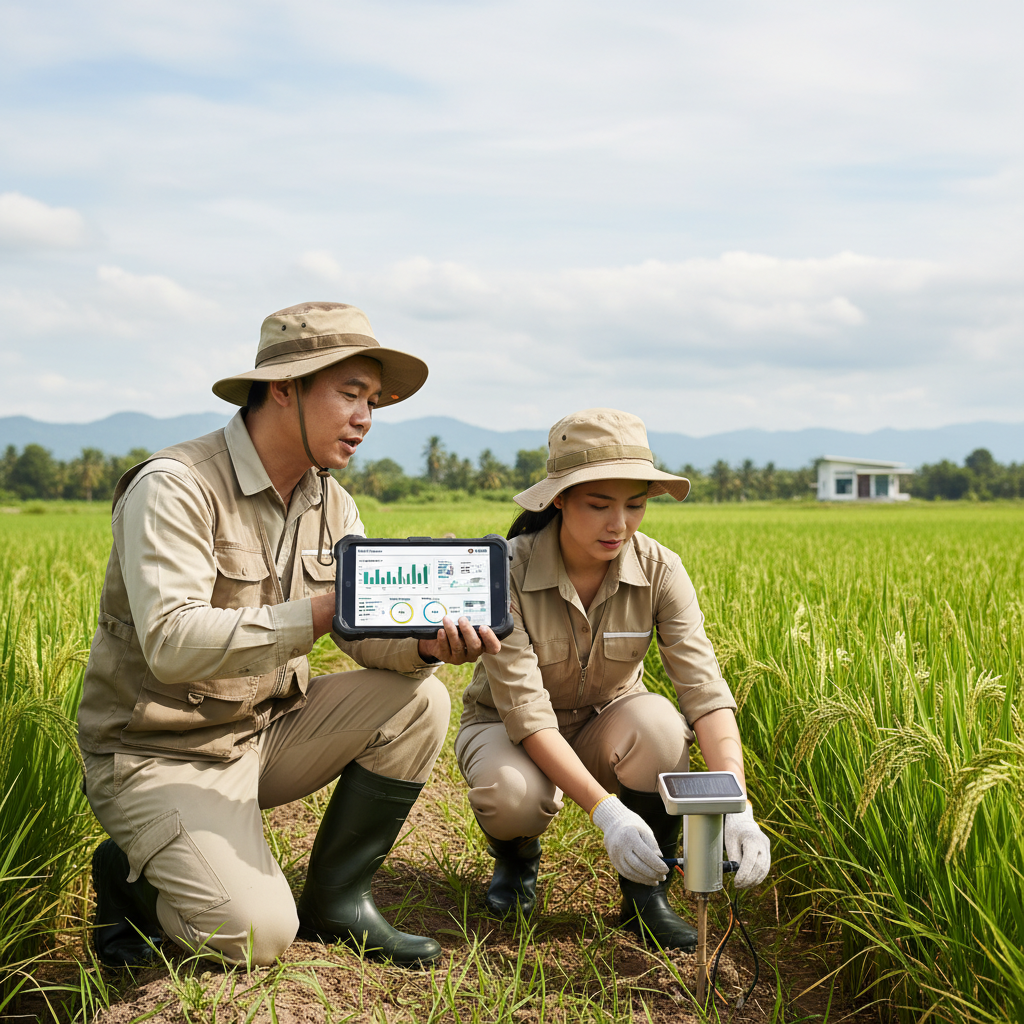
Collecting and analyzing operational data under actual conditions in each country is fundamental for evaluating technology effectiveness and supporting commercialization decisions.
Projects such as ASEAN-IVO, funded by Japan, with the participation of training organizations in Vietnam like the Faculty of Agricultural Technology – Hanoi University of Science and Technology, demonstrate how IoT data systems can help transparentize information and objectively evaluate technology effectiveness. Similarly, agricultural drone models like Poladrone in Malaysia also rely on real-world data to optimize operations and reduce risks (Southeast Asia Agricultural Technology Report, 2024).
5. Value of technology validation for providers
Structured validation methods provide distinct value when applied to different types of technology providers, aligning with their resources, objectives, and operational specifics.
For small and medium technology providers, structured validation helps optimize resource allocation by prioritizing the testing of specific risks and focusing on practical feedback, thereby allowing for quicker adjustments to solutions that better match market demand. This minimizes costs arising from ineffective trials and increases the likelihood of success when entering new markets. This approach serves as a guide, limiting resource waste when investment resources are limited, while also contributing to building a clear development roadmap for expansion into the ASEAN market.
For large corporations and enterprises, structured validation methods generate transparent data sets linked to empirical evidence. This supports decision-making for large-scale investments and strategic risk control, especially in the context of multiple markets and increasingly stringent international compliance requirements. Data and method consistency also helps maintain brand reputation and protect long-term interests, especially when operating in markets with complex legal and competitive environments.
For public agricultural and community development projects, structured validation plays a role in ensuring the suitability of technology from the trial phase to widespread deployment. These methods allow for comprehensive assessment of social and economic impacts, thereby balancing development benefits with the actual acceptance capacity of local communities. As a result, projects not only meet technological criteria but also increase opportunities for long-term sustainable success, aligning with community-oriented development goals.

The risks of deploying European agricultural technology in ASEAN do not stem from the technology itself, but from the gap between the initial design conditions and the region’s actual operating context. The tropical climate, high humidity, fragmented farming ecosystems, and uneven infrastructure mean that many solutions need to be re-verified before commercial expansion.
Long-term pilot programs, the involvement of local experts, and real-world operational data are crucial factors in mitigating risks, while also forming the foundation for sustainable commercialization of technology in the ASEAN market.
M-Expert supports technology providers in implementing pilot programs, validating solutions, and assessing operational risks under real conditions in ASEAN.
👉 Contact M-Expert to design technology testing and validation programs before expanding to new markets here.
———————————-

- Email: Community@mekonglink.asia
- Website: mekonglink.asia
- International phone: (+84) 02888868685
- Vietnam phone: (+84) 364689922 (+84) 364689911


Responses