

1. Why Do Many Student Startup Projects Fail at an Early Stage?
In recent years, student startups have been strongly promoted in universities, not only in Vietnam but also worldwide. According to data collected from reports on entrepreneurship education, tens of thousands of student startup projects are created every year through university courses, idea competitions, and innovation programs.
In Vietnam, according to VnEconomy, within university startup support programs, an average of about 5,635 student startup projects are formed each year.
However, most of these projects do not move beyond the initial idea stage. Many projects stop after a course or competition ends and are not further developed into pilot products or viable business models. The reason is not a lack of motivation or creativity among students, but a lack of a supportive environment.

2. M-Kampus Global Startup Program 2026: When Local Problems Create Startup Opportunities for Students
The M-Kampus Global Startup Program 2026 is designed as a hands-on program for student startups, where startup ideas are developed directly from the Vietnamese market context. Instead of assuming market demand, students begin by observing and analyzing real economic and social problems in Vietnam. From there, they identify opportunities to build and scale startups in this market.
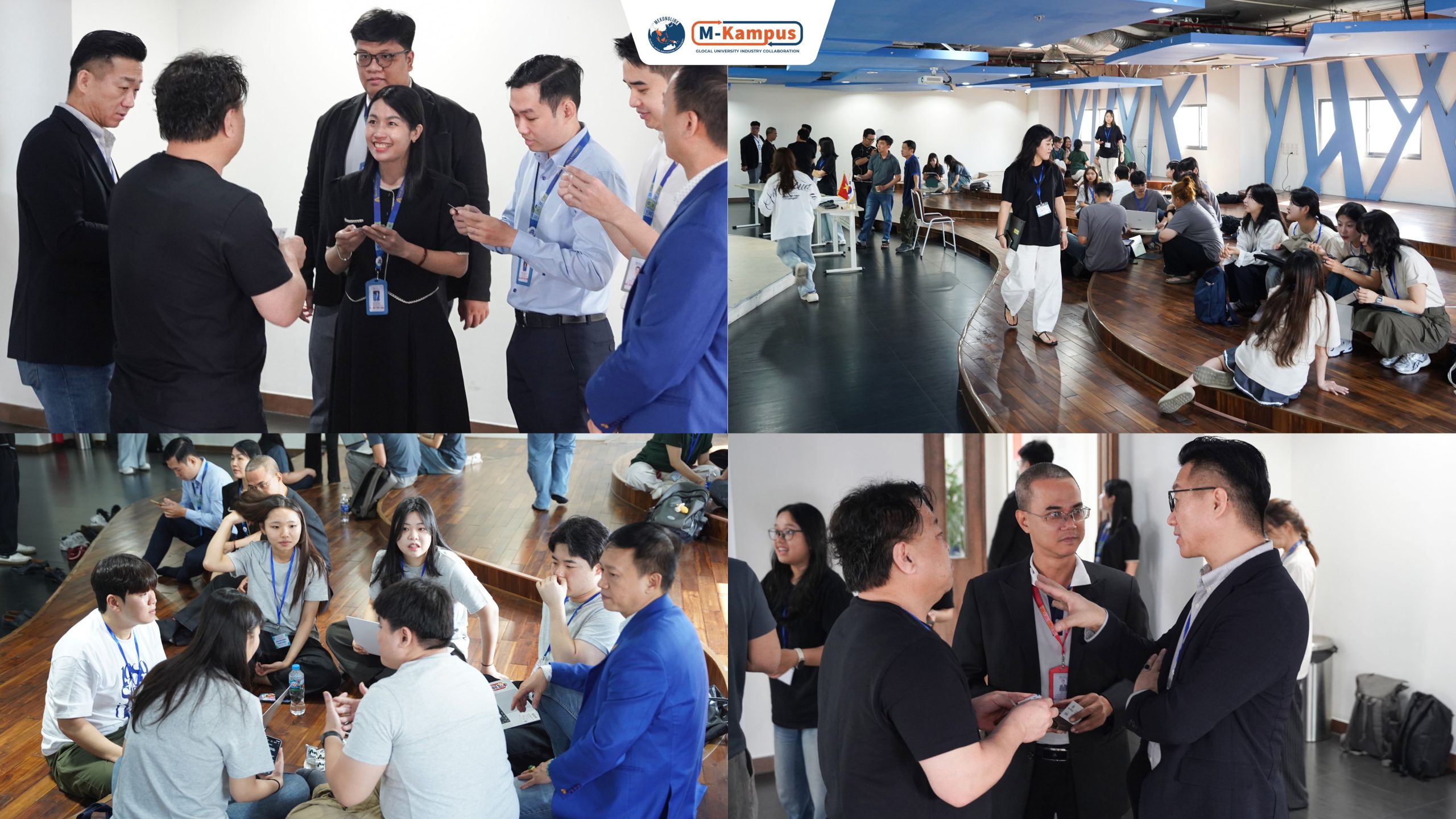
In the program, student teams from Daegu University (Korea) work closely with students from Hoa Sen University. Local students play an important role by providing insights into consumer behavior, market demand, and cultural factors that influence purchasing decisions. This working model helps ensure that startup ideas are placed in the right context from the very beginning.
At the same time, students receive direct support from local mentors and lecturers. They help with market analysis, target customer identification, and product positioning adjustments to fit real conditions in Vietnam.
3. Analysis of Five Representative Projects: Proof of Vietnamese–Korean Students’ Ability to Solve Real Problems
Based on field surveys, five student teams developed projects that directly address key “pain points” in the Vietnamese market.
3.1 Highly Waterproof Battery Swapping System: An EV Battery Solution for Flooded Cities
- Market problem: In large cities such as Ho Chi Minh City, frequent flooding during the rainy season makes electric motorbike batteries easy to damage and increases fire and explosion risks. This reduces consumer trust in electric vehicles, especially among delivery drivers and daily commuters.
- Startup solution: The student team proposed a battery swapping system using IP68-standard batteries that can operate continuously in water. The solution includes corrosion-resistant layers and a dual-protection design. It targets electric vehicle brands that do not yet have advanced flood-resistant technology.
- Co-creation by students and mentors: Vietnamese students played a key role in providing real data on user behavior, travel habits, and risk tolerance when riding through flooded areas. Based on this input, Korean students adjusted technical standards and deployment models to match urban conditions in Vietnam.
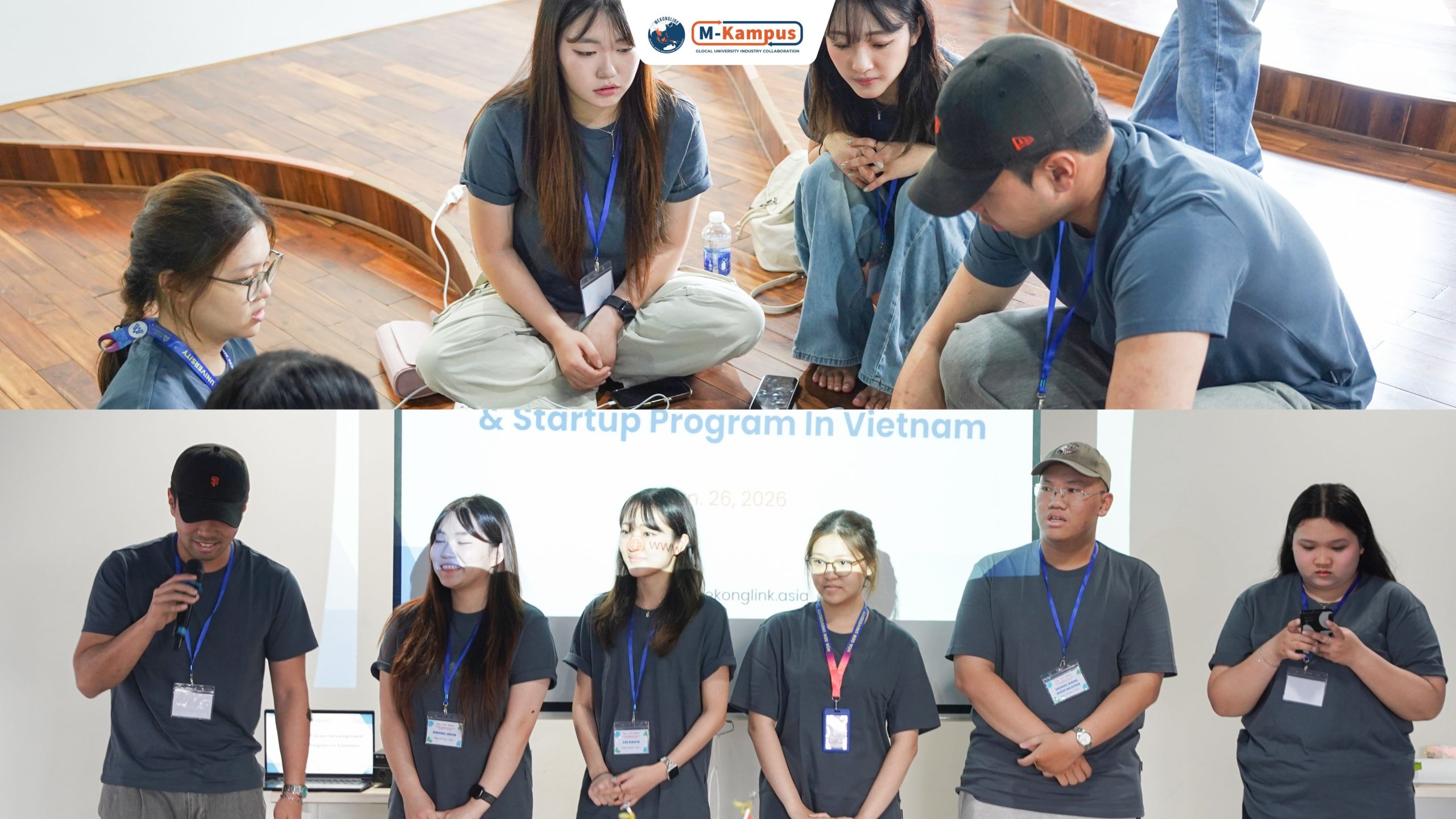
3.2 Problem Definition & Data-Driven Smart Agriculture Model: Smart Farming Based on Real-Time Data
- Market problem: Vietnamese agriculture faces climate change, saltwater intrusion, and crop diseases. However, most farmers still rely on experience-based farming and lack real-time data to monitor soil and crop conditions. This leads to high costs and unstable productivity.
- Startup solution: The team proposed a data-driven smart agriculture model using IoT technology. The solution combines crop growth models and soil nutrient dynamics to forecast yields, optimize fertilizer use, and support more accurate decision-making.
- Co-creation by students and mentors: Vietnamese students provided insights into real farming conditions, small-scale production, and farmers’ limited investment capacity. As a result, Korean students adjusted the solution to be simpler, more affordable, and suitable for Vietnam’s agricultural context.
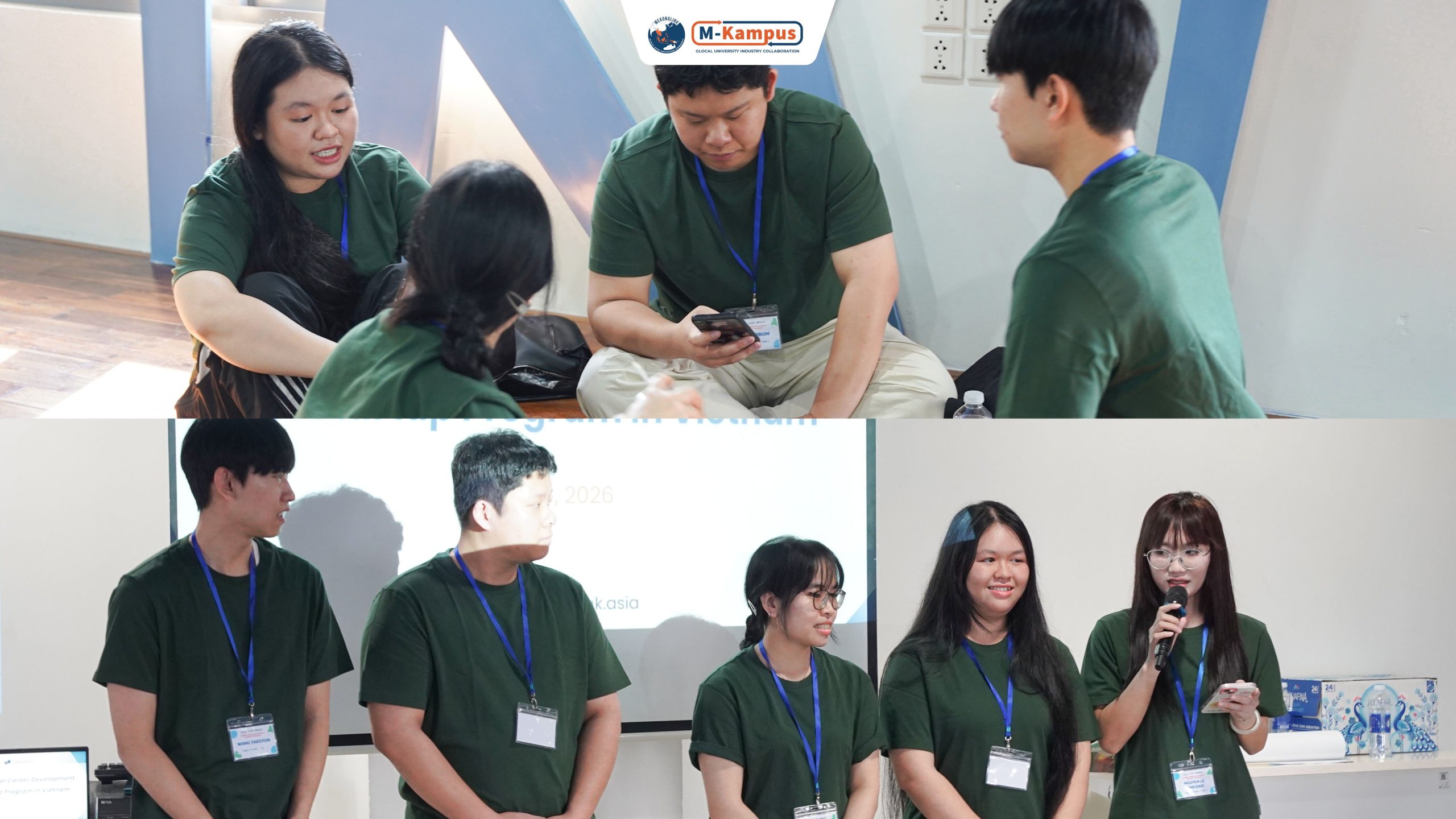
3.3 K-Cultural Content Project 1: K-POP Characters and Pop-up Experience Spaces in Vietnam
- Market problem: Demand for K-pop in Vietnam is growing fast, but consumption is mainly online. The market lacks offline experience models that can be commercialized in the long term. At the same time, Vietnam has a high acceptance of character-based marketing.
- Startup solution: The project develops localized K-pop characters combined with pop-up stores, DIY kits, experience zones, and seasonal events (such as Tet and zodiac-themed characters). The model focuses on long-term brand building rather than short-term sales.
- Co-creation by students and mentors: Vietnamese students helped Korean students adjust character designs, events, and communication messages to match local culture, especially Tet traditions and Gen Z’s community event habits.
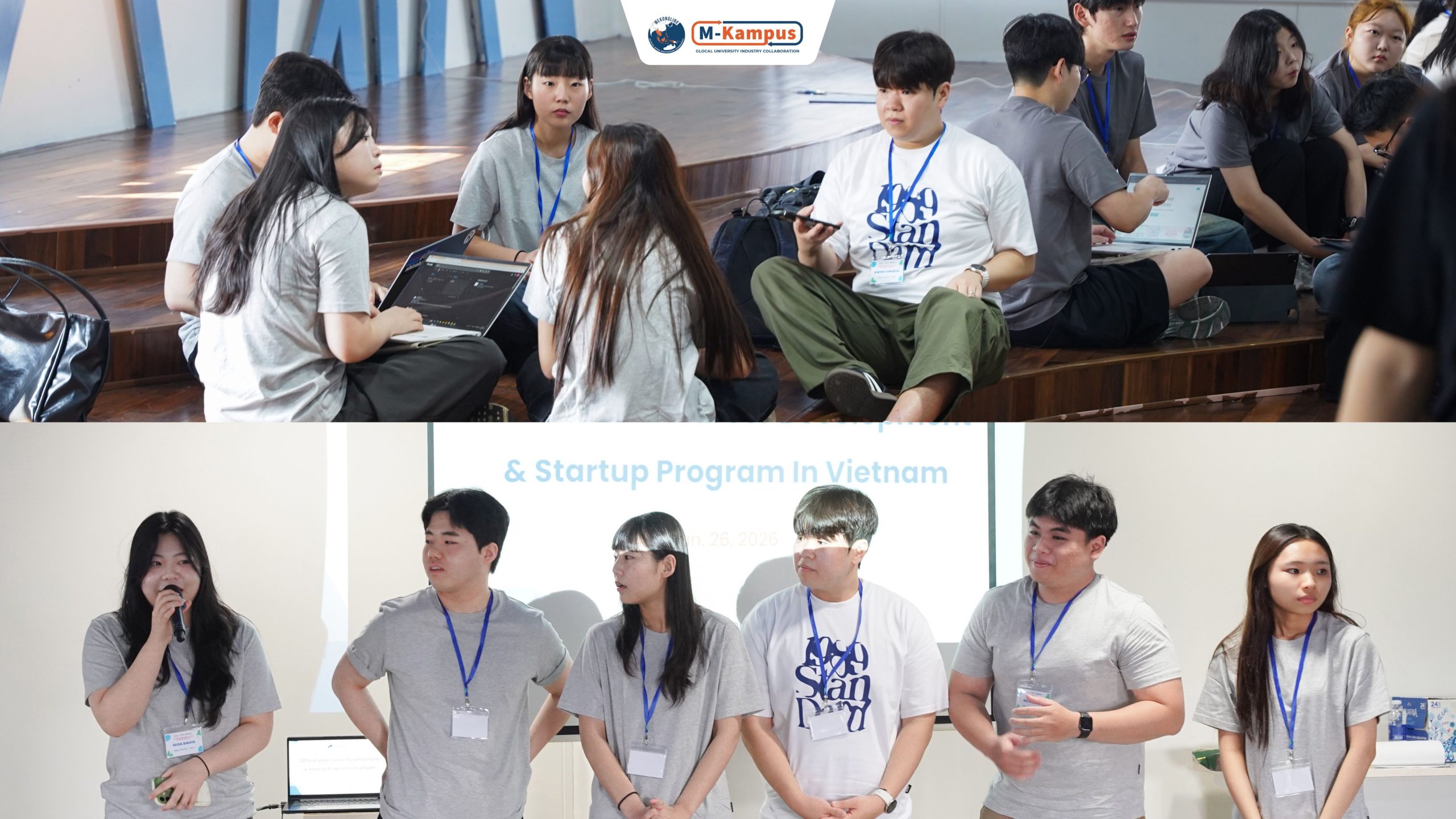
3.4 K-Cultural Content Project 2: From K-pop Fandom to a Business Experience Space
- Market problem: Although K-pop is very popular in Vietnam, Gen Z fans lack a physical space to connect, create content, and turn fandom energy into business activities.
- Startup solution: The startup proposes a K-pop experience space that includes relay dance areas, merchandise shops, idol experience studios, and birthday cafés. The space supports experiences while generating revenue from short-form content, retail, and events.
- Co-creation by students and mentors: Vietnamese students helped Korean students understand fandom behavior in Ho Chi Minh City, including gathering habits, short-form content trends, and spending ability. As a result, the model was designed around TikTok, short-term offline events, and urban locations that fit local consumer culture.
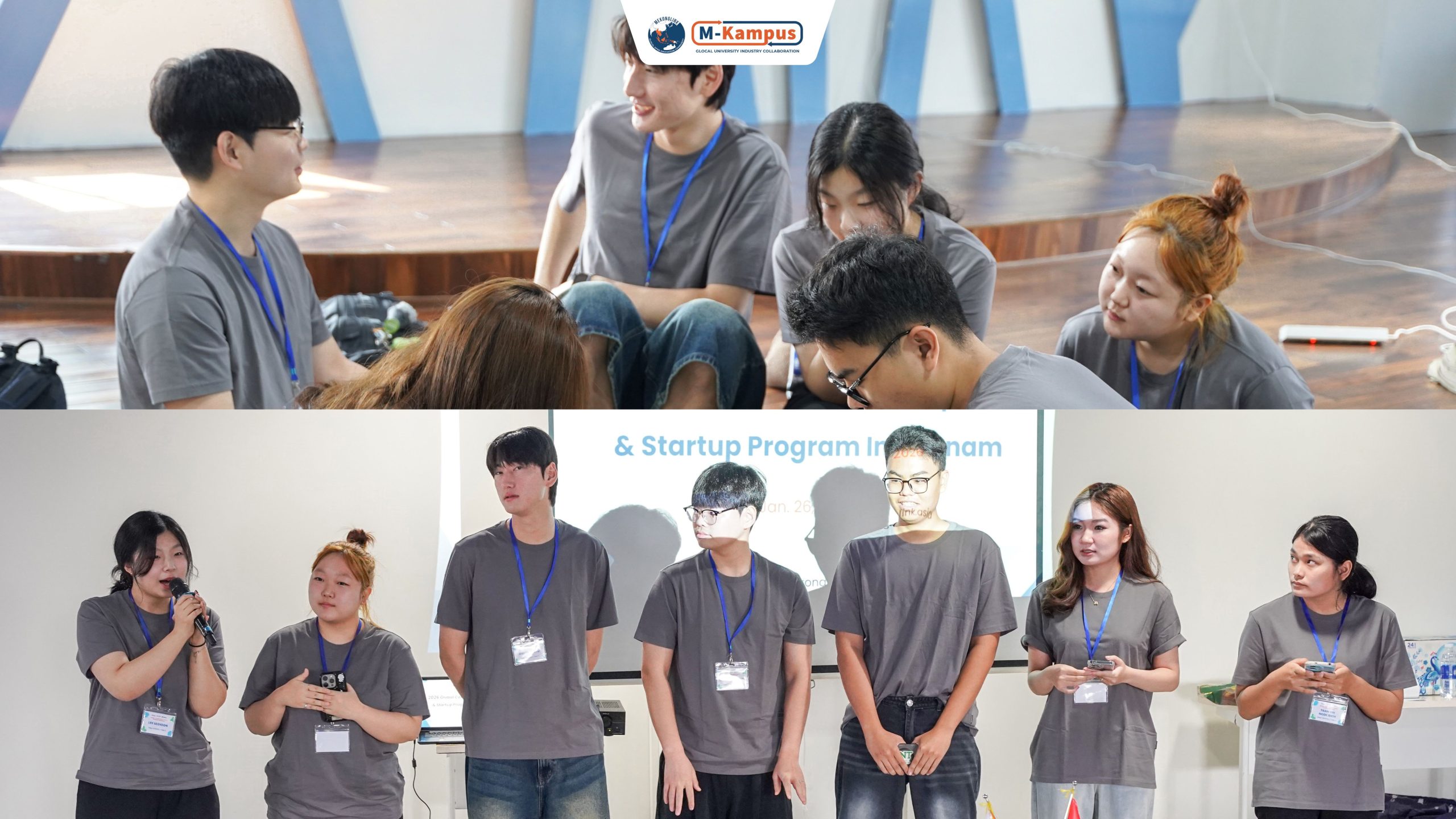
3.5 Rehabilitation & Welfare Project: A Digital Platform for Home-Based Rehabilitation Care
- Market problem: In Vietnam and many ASEAN countries, demand for rehabilitation services for elderly people, people with disabilities, and children with developmental delays is increasing. However, rehabilitation services are limited, costly, and lack skilled professionals. Many families cannot access specialized rehabilitation centers.
- Startup solution: The student team proposed a digital rehabilitation model that combines training support software, initial assessment tools, and a platform connecting users with rehabilitation specialists. The goal is to provide affordable home-based care.
- Co-creation by students and mentors: Vietnamese students helped Korean students understand healthcare access conditions, affordability, and real rehabilitation needs of families in Vietnam. Based on this, the solution was simplified to be easy to use and suitable for healthcare welfare systems in developing countries.

4. M-Kampus – A Partner Helping Vietnamese Universities Strengthen Student Capacity Through Field-Based Training
In the M-Kampus Global Startup Program 2026, M-Kampus acts as the program designer and coordinator. We connects universities with businesses, communities, and the Vietnamese market context. M-Kampus not only supports program organization but also builds a practical methodology to ensure students work on the right problems, in real environments, and with real market needs.
Based on the success of the program with Daegu University and Hoa Sen University students, M-Kampus aims to expand this model to more universities in Vietnam. Universities seeking deep international programs with clear social impact and strong real-world readiness for students can contact M-Kampus to co-design and implement similar meaningful programs.
This cooperation not only benefits students but also contributes to building an education and innovation ecosystem linked to Vietnam’s long-term development.
Universities and education leaders looking for practical, socially impactful training solutions are invited to join the M-Kampus ecosystem and help scale this meaningful education model in Vietnam.
__________________________________________________
 Contact information:
- Email: Community@mekonglink.asia
- International phone: (+84) 02888868685
- Vietnam phone: (+84) 364689922 (+84) 364689911


Responses