

1. Current Situation and Challenges in the Demand for Energy Storage in ASEAN
1.1 Current Demand for Energy Storage
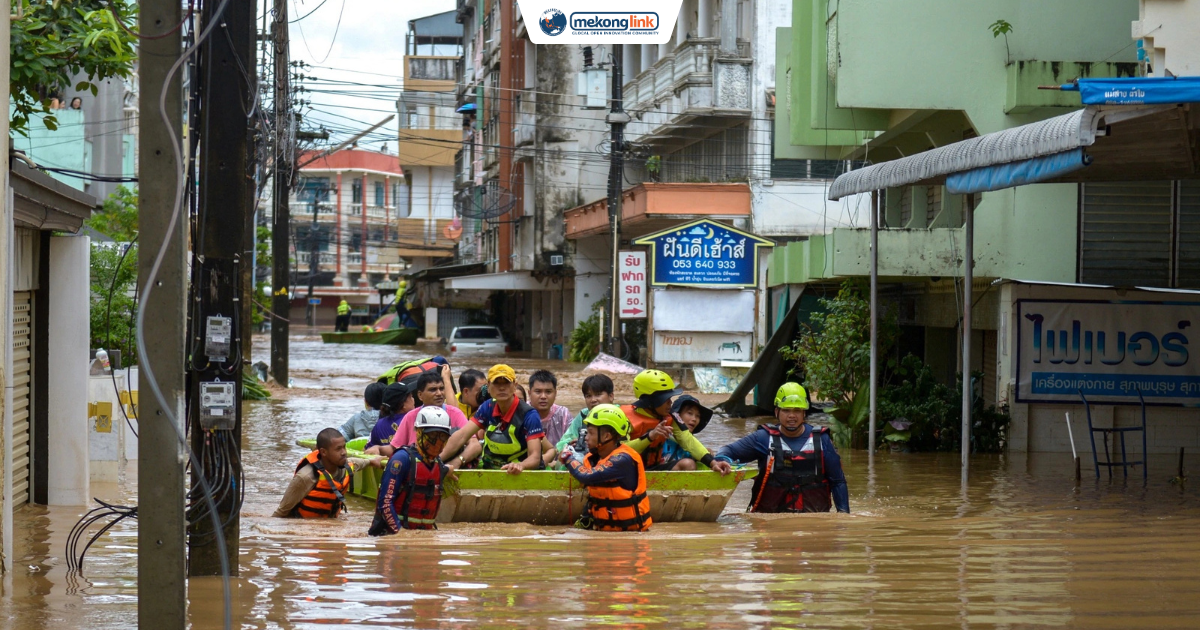
ASEAN is located in Southeast Asia, the region with the strongest tropical cyclone activity in the world, accounting for about 30% of all global storms (ASEAN SOER6 Report, 2023). These disasters often cause large-scale power outages, paralyzing rescue, healthcare, and production, and creating economic losses of tens of billions of USD each year in Asia – Pacific.
In 2024:
- The Northwest Pacific region recorded 23 named storms, including 15 typhoons and 9 major typhoons (Category 3 or higher).
- About 820 – 1,000 people died.
- 120 people went missing.
- 2,200 people were injured.
- Economic damage was over USD 3.5 – 4 billion.
(Data collected from ASEAN countries)
In 2025:
- Thailand: Typhoon Kajiki caused floods and landslides in 12 northern and northeastern provinces, leaving nearly 6,000 people isolated. Estimated economic damage: about USD 120 million.
- Vietnam: Typhoon Kajiki left 7 dead, 1 missing, uprooted 18,000 trees, and knocked down 331 electric poles, leading to large-scale blackouts in Thanh Hoa, Nghe An, and Ha Tinh (Reuters).
- Philippines: Typhoon Wipha killed 25 people and forced 278,000 to evacuate. It also caused severe flooding and widespread blackouts (AP World News).
These figures show that natural disasters in ASEAN are getting more severe. In particular, large – scale blackouts after storms seriously disrupt rescue and healthcare. This is the reason why ASEAN needs to invest in large – scale Energy Storage Solution systems to secure stable power supply for critical facilities and improve disaster response.
1.2 Challenges in Deploying Energy Storage
However, deploying energy storage systems during storms and floods, while infrastructure in ASEAN is still not fully developed, is very difficult:
- Dependence on diesel generators: This is a common temporary solution, but it causes pollution, noise, and does not meet CO₂ emission standards.
- Hard to deploy in disaster areas: Traditional energy systems are bulky, lack mobility, and are difficult to transport to isolated areas.
- Limited capacity: Current small – scale storage systems cannot meet the large demand of hospitals, data centers, or seaports.
- Battery durability and safety: Common battery technologies still have risks of fire and explosion, short lifespan, and fast performance decline when operated continuously.
In addition, according to IEA (2023), diesel generators in Asia account for more than 30% of NOx (Nitrogen Oxide) emissions, which directly harm the environment and human health. Meanwhile, ASEAN countries have set the Net Zero 2050 target, creating a big conflict between urgent power demand and emission reduction requirements.
Therefore, ASEAN needs a new Energy Storage Solution that can provide mobile electricity during disasters and daily life, while also fitting the clean energy development goals.
3. Energy Storage Solution(ESS) – A Clean Mobile Power Option for Life and Industry
3.1 What is an Energy Storage Solution(ESS)?
Energy Storage Solution (ESS) is a large – scale mobile electricity storage system that uses advanced battery technology to replace diesel generators. ESS produces zero CO₂ emissions, makes no noise, and can integrate directly with a solar battery storage system or wind power to supply clean and stable electricity anywhere.

3.2 Application Roadmap of Energy Storage Solution(ESS)
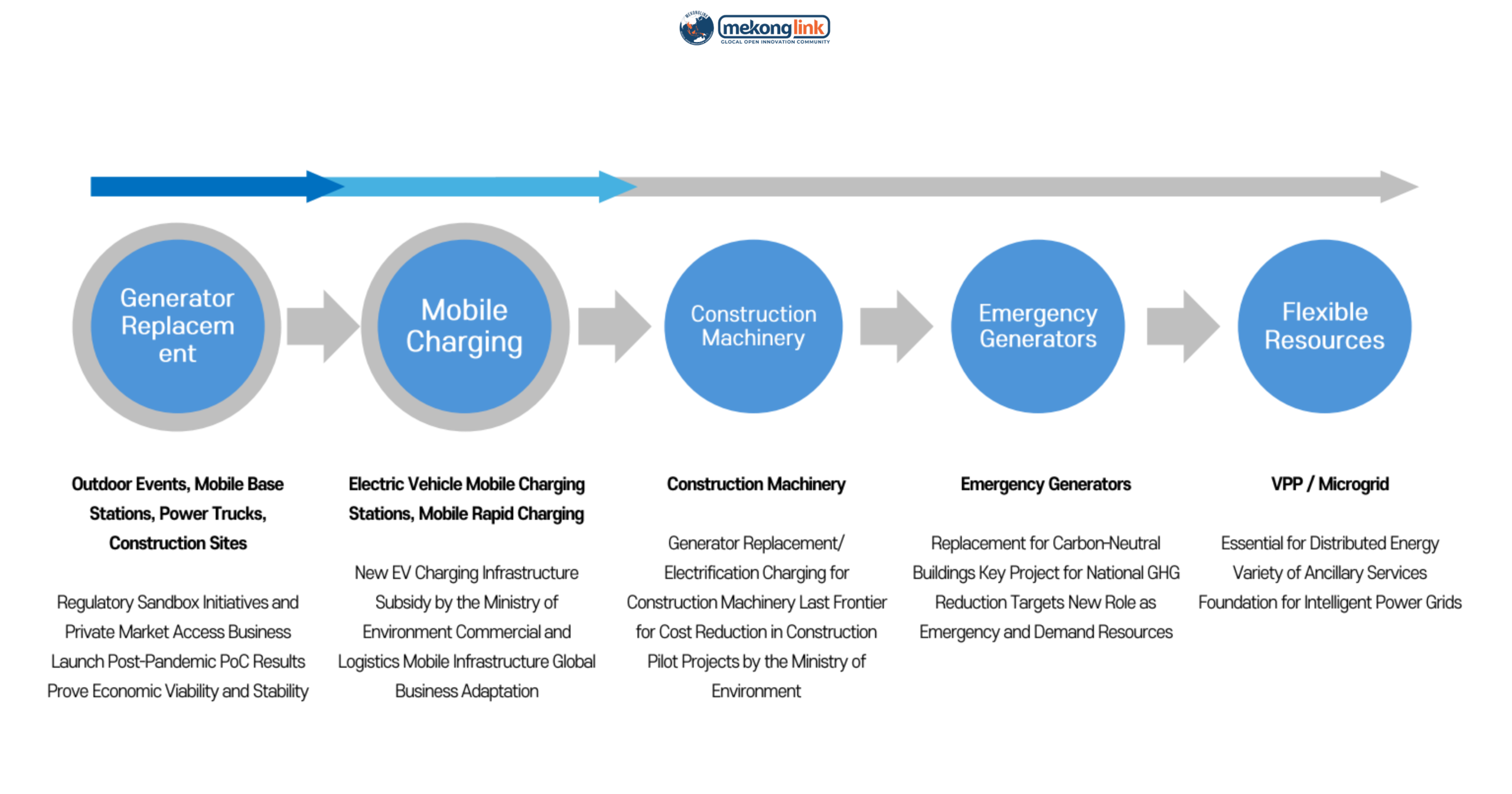
Energy Storage Solution is not only a storage system but also a technology that can expand to many different levels of application:
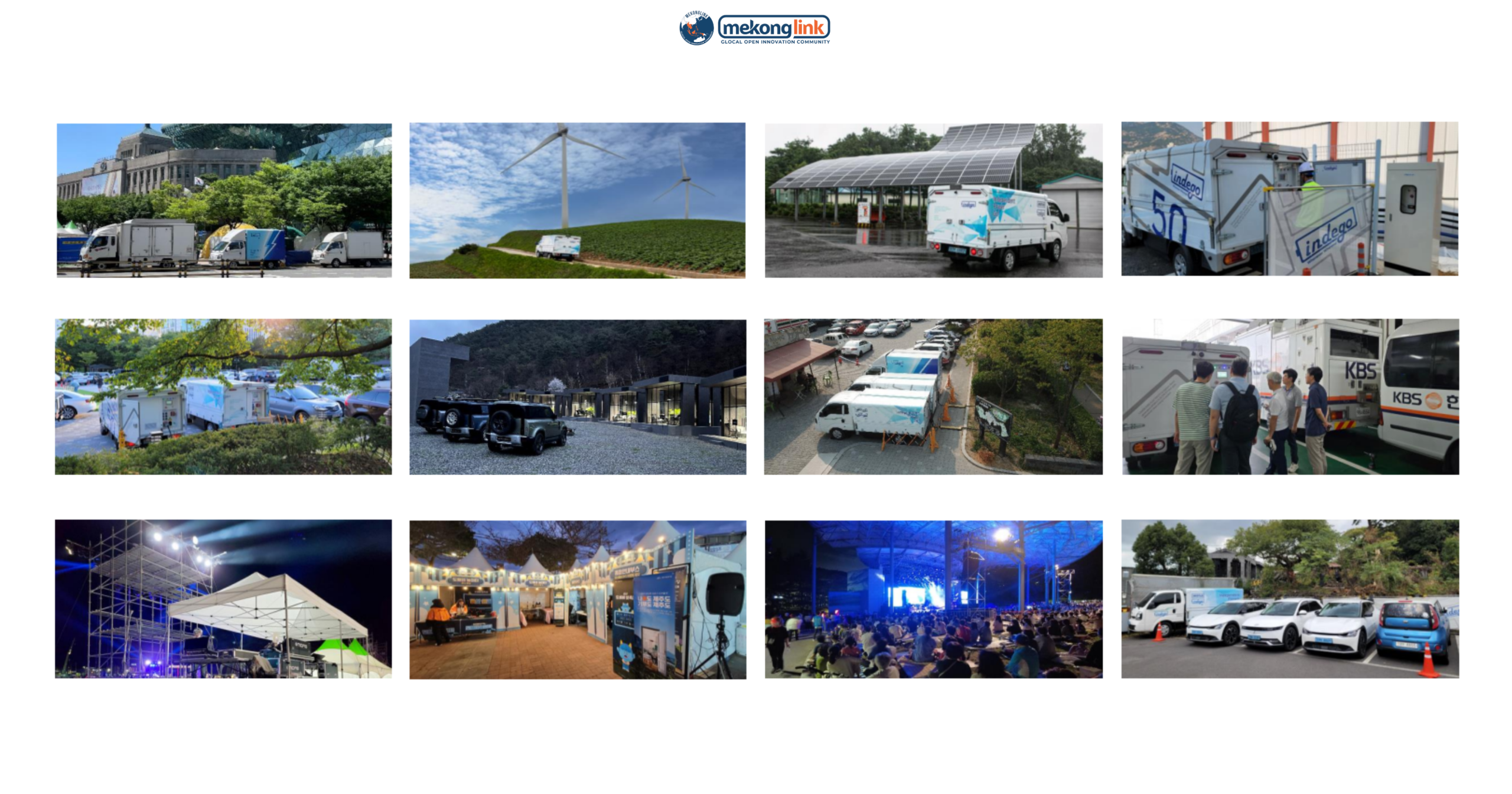
- Generator Replacement: ESS supplies electricity for outdoor events, construction sites, or telecom stations, replacing diesel generators that are noisy and polluting.
- Mobile Charging: ESS works as a flexible charging station for electric vehicles, especially useful in areas without fixed charging infrastructure.
- Power Supply for Construction Machinery: ESS provides electricity for construction machines instead of using diesel fuel, helping to reduce costs and emissions.
- Emergency Generators: In emergency situations, ESS becomes a backup power source for carbon-neutral buildings, hospitals, or critical infrastructure.
- Flexible Grid Resources (VPP/Microgrid): ESS can integrate into modern power systems to store electricity when there is surplus and supply back when there is shortage.
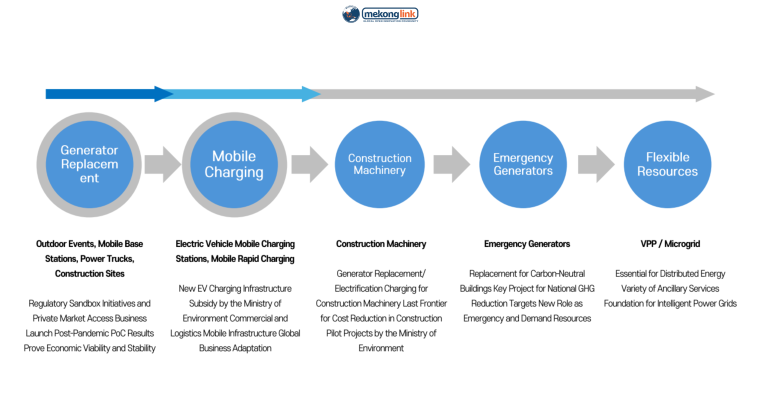
Application Roadmap of ESS: From Outdoor Events to Smart Grids
3.3 Five Outstanding Technological Features of ESS
Energy Storage Solution (ESS) is designed with modern technology, offering many strong advantages and becoming a reliable replacement for traditional diesel generators.
- Integration with Renewable Energy: ESS can connect directly with solar and wind power sources. The system makes use of available clean energy and reduces dependence on fossil fuels.
- Mobility and Flexibility: With modular and container design, ESS can be transported and installed very quickly, suitable for cities, construction sites, or disaster areas.
- Stable Operation Performance: The system is integrated with BMS (Battery Management System) and EMS (Energy Management System) for smart monitoring. This ensures ESS always delivers continuous and stable power, even when renewable energy supply fluctuates.
- Environmentally Friendly: ESS operates completely clean, producing no smoke and no noise like diesel generators.
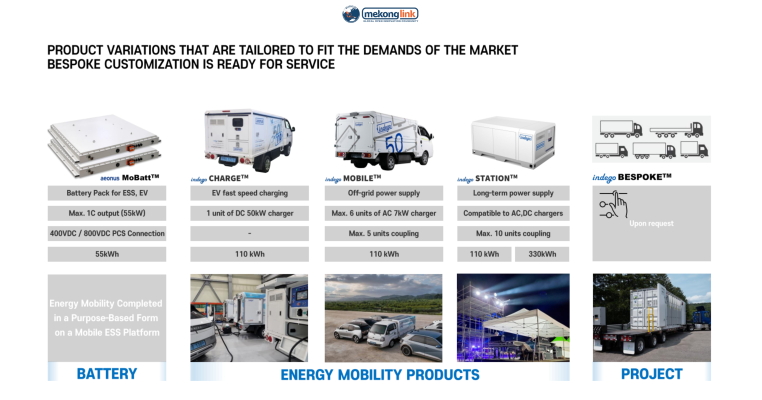
Operating Time of Indego Station Ranges from 1.1 Hours to 16.5 Hours Depending on Battery Capacity and Load Power
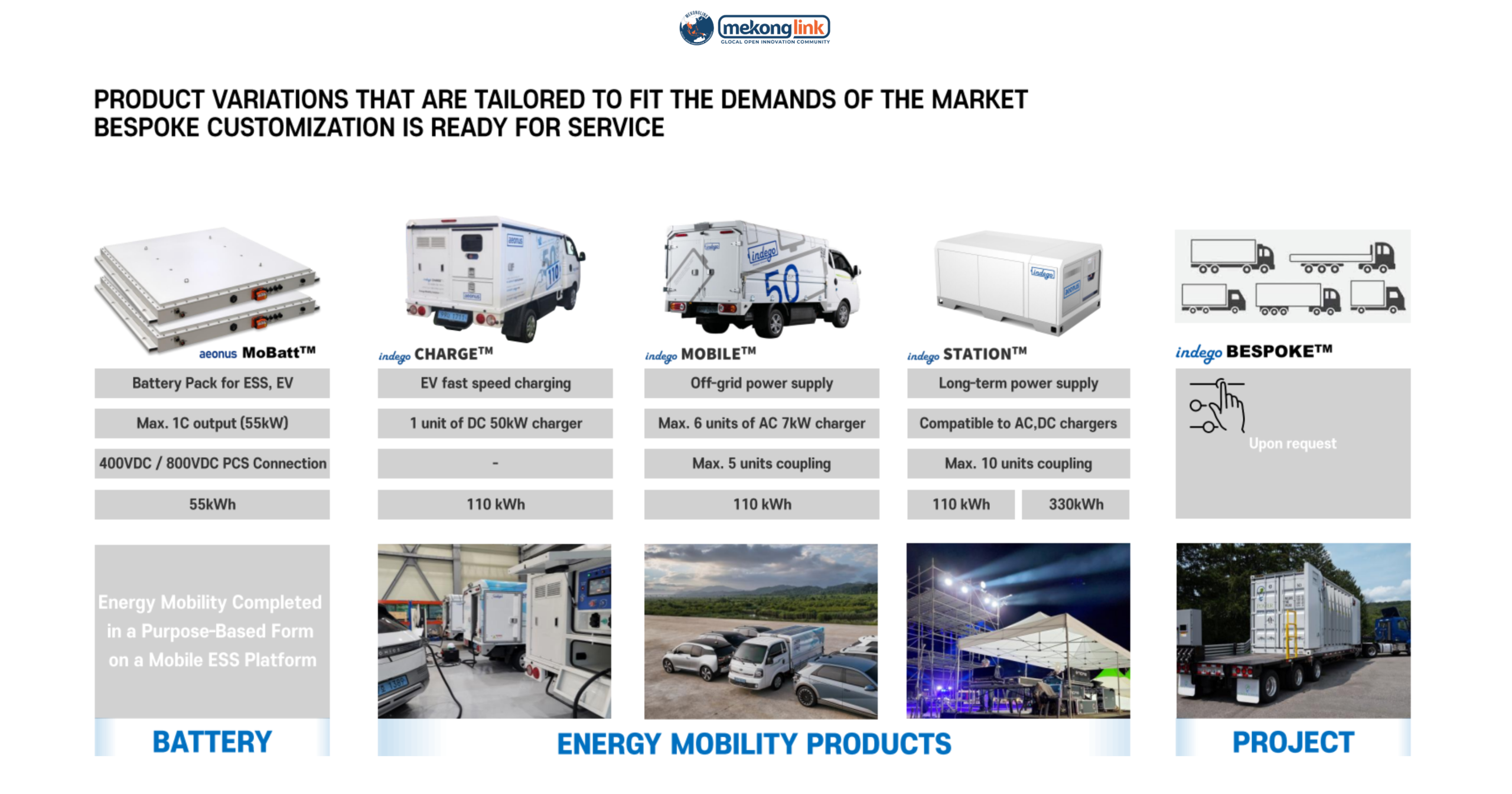
| Operating Time of Indego Station with Output Power: 20 – 100 kW | |
| Time (hours) = Battery Capacity (kWh) ÷ Load Power (kW) | |
| 1. Station™ 110kW | 2. Station™ 330kWh |
|
– With 20 kW load → 110 ÷ 20 = 5.5 hours – With 50 kW load → 110 ÷ 50 = 2.2 hours – With 100 kW load → 110 ÷ 100 = 1.1 hours |
– With 20 kW load → 330 ÷ 20 = 16.5 hours – With 50 kW load → 330 ÷ 50 = 6.6 hours – With 100 kW load → 330 ÷ 100 = 3.3 hours |
This example shows that Energy Storage Solution (ESS) can flexibly meet many real situations, from events and construction sites to disaster response, and helps users easily calculate according to their actual needs.
4. Potential Development from Mobile Energy Storage Solution (ESS)
4.1 Net Zero and BCG (Bio-Circular-Green): Opportunities for Energy Storage Solution (ESS) in ASEAN
The year 2025 marks an important stage for ASEAN countries on their roadmap toward the Net Zero target:
- At the COP26 Conference, countries in the region committed to achieve net zero emissions by 2050 and to cut at least 40% of emissions by 2030.
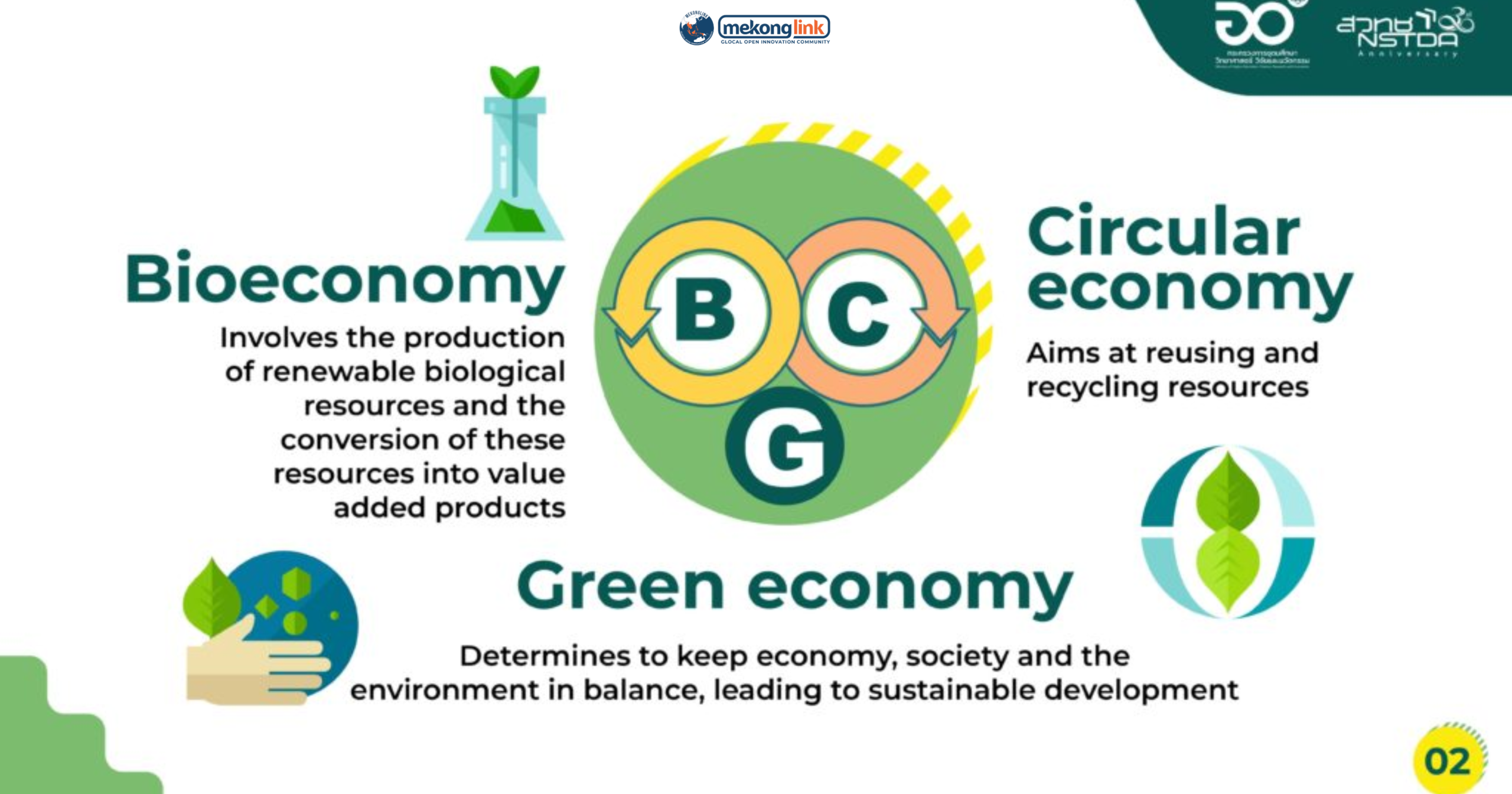
- In Thailand, the government is developing the BCG strategy (Bio – Circular – Green Economy – aiming for a more sustainable green economy.
This creates a strong demand for clean energy solutions, and this is exactly the space where Energy Storage Solution (ESS) can play its role and support ASEAN countries to reach the Net Zero goal step by step.
4.2 Opportunities for Research and Development
Energy Storage Solution (ESS) not only brings commercial value but also opens important opportunities for research and development in ASEAN:
- Research on EV Charging Stations: The ASEAN EV market in 2025 is estimated at more than USD 4.5 billion and expected to reach nearly USD 18.7 billion by 2030 (Mordor Intelligence, 2024). However, many countries such as Thailand and the Philippines still face limited charging infrastructure. This is an opportunity for ESS to be researched and developed into mobile EV charging stations, providing flexible and easy-to-deploy solutions to support EV adoption in the region.
- Power Supply for Large Outdoor Events: Outdoor music and sports events always need very large power but still rely on traditional methods. These methods cause noise and CO₂ emissions, which go against the “Net Zero” trend that ASEAN countries are pursuing. Developing ESS as a clean, flexible, and safe power storage system will open attractive commercial potential in the events sector.
Research on Emergency Power in Healthcare: Power outages in hospitals during disasters can directly affect patient lives. If ESS is developed as an emergency storage source for healthcare, field hospitals could maintain ventilators, vaccine refrigerators, and critical medical equipment without interruption. Diesel generators cannot meet this need effectively because of safety risks and high operating costs.
To reach the Net Zero 2050 target, ASEAN needs clean energy technologies that can fully replace traditional diesel generators. Energy Storage Solution (ESS) is the key solution to help the region secure energy supply, cut emissions, and maintain sustainable growth.
If you are interested and want to research and develop green energy storage technology (ESS), please contact us at Mekonglink through the information below.
________________________________________________

- ☎️ Contact information:
- Email: Community@mekonglink.asia
- International phone: (+84) 02888868685
- LINE: https://line.me/R/ti/p/@702dyrqh


Responses