

1. Current Situation: Why Do Growth Opportunities Still Leave Gaps for SMEs?
1.1 The Strong Attraction of Growth Numbers
The regional economy is showing strong signs of recovery and growth despite global uncertainties. Many reputable financial institutions have released positive forecasts for this region during the 2024-2025 period.
According to the Asian Development Outlook by ADB, GDP growth in Southeast Asia for 2024-2025 is expected to be around 4-5%, higher than in many other regions. This growth is driven by the recovery of tourism, exports, and strong domestic consumption.
In practice, many SMEs feel pressure from these positive macroeconomic signals and widely promoted success stories. This often leads to a fear of missing out (FOMO) when they decide to enter new markets.

1.2 The Alarming Failure Rate of SMEs
While the macroeconomic picture looks positive, the micro-level reality is much tougher. Reports on SME policy indexes show that small businesses face many challenges when expanding beyond their home countries.
According to the ASEAN SME Policy Index 2024, non-tariff barriers, lack of market information, and limited access to local distribution networks are the main reasons for SME failure. Many international businesses are forced to reduce operations or withdraw shortly after entering the market because operating costs are high, while revenue does not meet expectations.
They eventually realize that ASEAN is not a single unified market, but a group of 10 countries with very different cultures, legal systems, and consumer behaviors. Failing to anticipate this complexity is the dark side of the growth picture, where traditional entry mode strategies often become ineffective.
2. Gaps in Entry Mode: The Mismatch Between Expectations and Reality
2.1 Entry Mode and Level of Market Presence
Conceptually, entry mode refers to how a business chooses to enter and operate in a new market. This includes methods such as exporting, franchising, joint ventures, or direct investment. This decision directly affects the level of control, cost, and risk in market expansion.
In practice, entry mode does not directly decide how sales are made. Instead, it shapes the level of presence and interaction a business can have in the market. This difference often creates a gap between what companies expect and what the market actually requires.

Studies on market behavior in Southeast Asia from the Edelman Trust Barometer (2024) and McKinsey show that in B2B transactions, trust, relationships, long-term commitment, and consistent local presence play a key role in decision-making. In this context, technical advantages or product specifications only work well when they are built on a strong foundation of trust.
As a result, many companies with good solutions still struggle to approach customers and close deals because their chosen entry mode does not match the level of presence and interaction the market expects.
2.2 The Paradox: Many Contacts but No Sales
One of the clearest signs of a wrong entry strategy is having many contacts but very few contracts. Companies may spend large budgets on marketing, attend trade shows, and collect hundreds of business cards, emails, or phone numbers. However, only a small number of these contacts actually become paying customers.
According to analysis from the World Bank and many digital economy reports, customer behavior is becoming more cautious. New consumer groups and B2B buyers are more careful when making decisions. They are not only concerned about product specifications or price. They also want real product experience, local support, and long-term confidence in cooperation. This makes remote sales models or paper-based market entry approaches much less effective.
The gap between “having interested contacts” and “closing real sales” is where company finances can quickly disappear. Businesses still have to pay for marketing and operations, but without enough revenue to cover costs. This creates financial pressure and often forces companies to exit the market.

3. Closing the Gap: Moving from Entry Mode Theory to Local Execution
3.1 Why Local Market Insights Decide Entry Mode Success
Macro-level reports show growth potential, but they often lack the operational data needed to implement an effective entry mode. This gap is especially clear for SMEs expanding into ASEAN, where markets are highly fragmented by country and by industry.
According to the ASEAN SME Policy Index 2024, SMEs account for 97-99% of all businesses in ASEAN, contribute around 50% of GDP, and provide more than 180 million jobs. However, the report also points out that internationalization capability and access to foreign markets remain major weaknesses for SMEs, even though policy environments have improved.
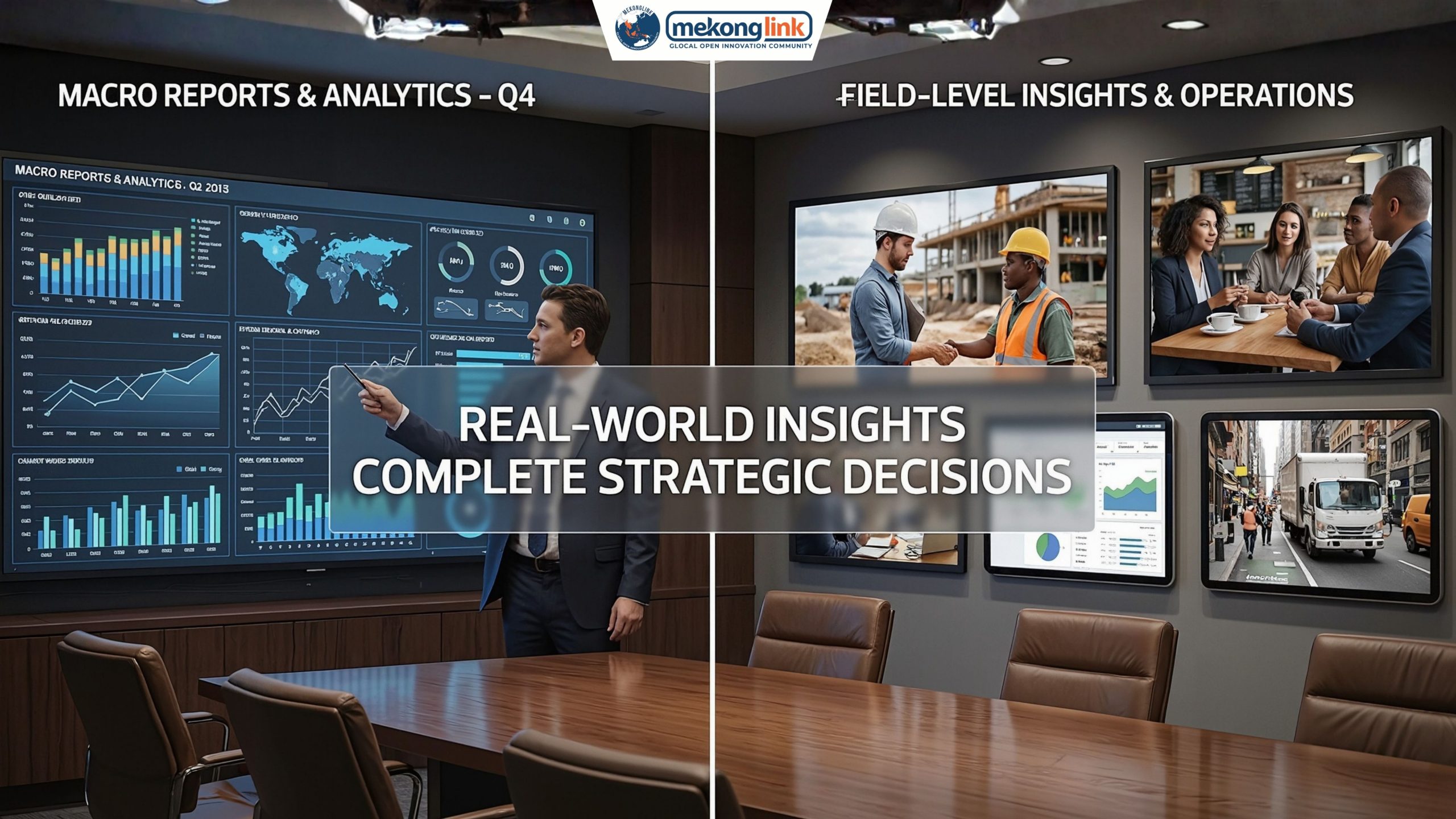
The core problem is not market size, but the lack of local market insights needed for entry mode decisions, including:
- How local B2B customers actually make purchasing decisions
- The real role of distributors, intermediaries, and relationship networks
- “Unofficial” barriers such as trust, industry reputation, and long-term presence expectations
In addition, data from the World Bank Enterprise Surveys shows that businesses face many obstacles in the operating environment, including a lack of market information, difficulty reaching new customers, and limited internal capacity. These barriers directly affect a company’s ability to operate and expand in new markets.
3.2 The Power of Local Expert Networks: Turning Entry Mode from Plans into Revenue
If entry mode gaps come from a lack of local insights and the inability to “read” the market, the solution cannot be just more reports or small changes in investment models. What businesses really need is a human connection layer – people who understand the market from the inside.
Local expert networks act as a bridge between strategy and real operations. They help businesses:
- Understand how the market works in practice, including buying behavior, decision processes, and unwritten industry rules
- Connect with the right partners and customers from the beginning, avoiding wasted time and cost on low-value relationships
- Evaluate whether a solution truly fits the local context before scaling investment
From an entry mode perspective, this allows SMEs to move toward a “validate first – expand later” approach. Instead of early commitments to offices, staff, or distribution systems, businesses can start with small-scale Proof of Concept (PoC) projects led by local experts.
This approach helps reduce financial risk when entering new markets and provides real feedback from customers and partners. Companies can then adjust their entry strategies based on real data, not assumptions.

Many SMEs do not fail because they choose the wrong market, but because they implement entry mode strategies without truly understanding how the market works at the operational level. Macro reports show potential, but they cannot replace local insights into buying behavior, relationship networks, and informal barriers.
Therefore, an effective entry mode should start with real validation, not early investment. Accessing local expert networks and running small-scale PoCs helps businesses understand the market correctly, adjust strategies flexibly, and reduce expansion risks.
M-Expert supports SMEs at this critical stage of entry mode by connecting them with local experts who are actively working in the industry. This approach helps businesses validate real market demand and revenue potential before making large-scale investment decisions.
👉 Contact M-Expert now to enter new markets with lower risk, starting from real local data and practical testing!
_________________________________________________
☎️ Contact information:

- Email: Community@mekonglink.asia
- Website: mekonglink.asia
- International phone: (+84) 02888868685
- Vietnam phone: (+84) 364689922 (+84) 364689911


Responses