

1. Challenges of Greenhouse Operations in the Context of Energy Price Fluctuations
Energy costs are becoming one of the major challenges for greenhouse farming models, especially in markets like Australia. Amidst increasing global economic factors and geopolitical tensions, energy prices tend to fluctuate strongly, directly affecting operating costs and production efficiency.
According to Australian forecasts, tensions in the Middle East may cause inflation to rise to about 5%, in which energy prices are one of the main factors putting pressure. This shows that energy cost risk is no longer short-term but is becoming an uncertain factor in the long-term for industries heavily dependent on energy like greenhouse agriculture.
In fact, when electricity and fuel costs rise, greenhouse operations face dual pressure: maintaining stable environmental conditions for crops while controlling costs to ensure economic efficiency. This raises the urgent need for greenhouse ventilation solutions to optimize energy consumption and reduce dependence on market fluctuations.

2. Overview of Two Current Greenhouse Ventilation Solutions
2.1 Traditional Greenhouse Ventilation System
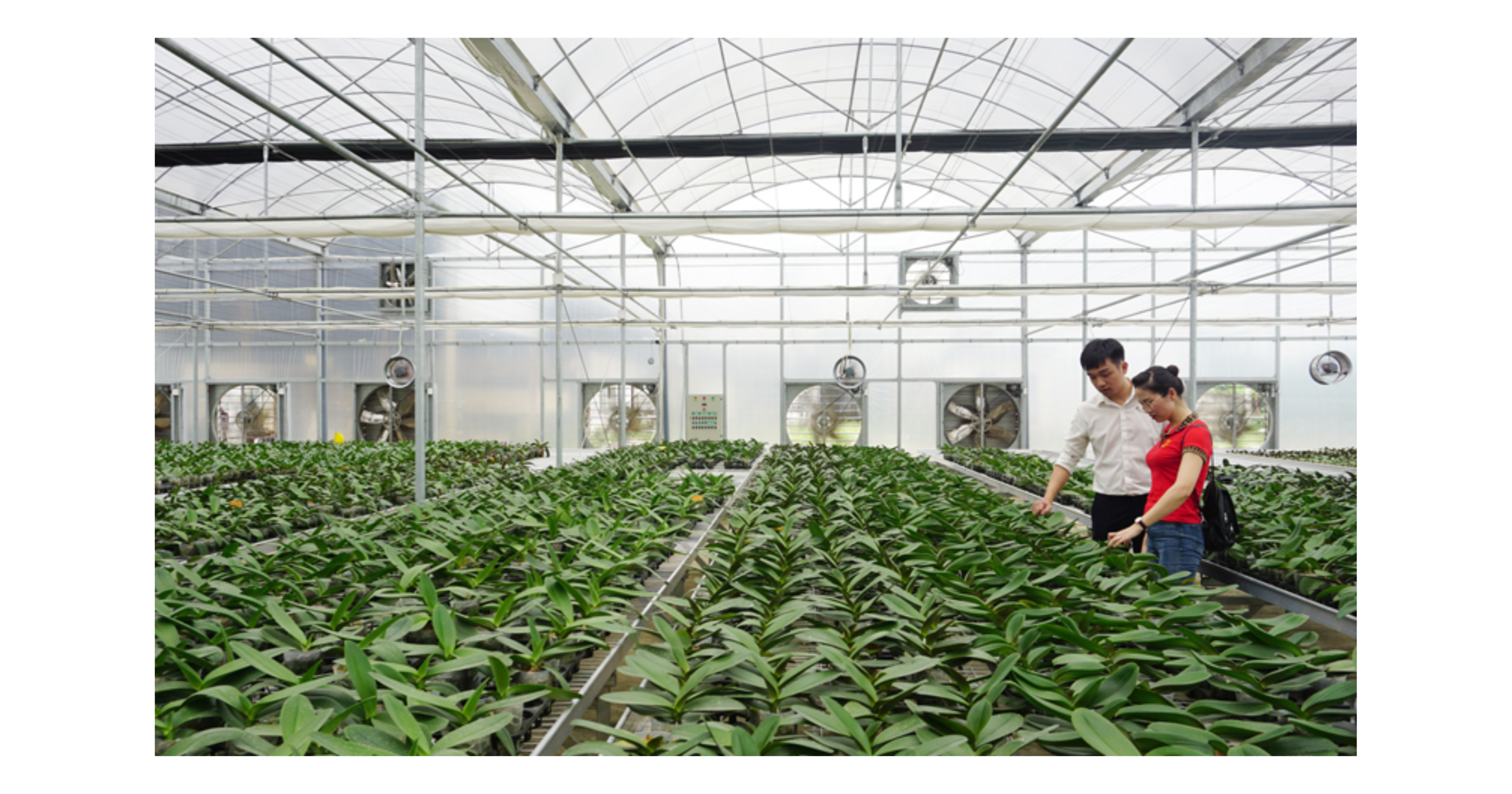
This traditional greenhouse ventilation system circulates air and regulates greenhouse temperature using electromechanical equipment. Fans are strategically placed, operated according to signals from temperature and humidity sensors, and controlled via electronic panels. The main mechanism is to create forced convection, extracting hot air outside or bringing cool air in to stabilize the microclimate for the crops.
An important characteristic is that this system requires a continuous power supply for fans and control components to run smoothly; furthermore, the system’s automation mainly relies on integration with sensors and temperature controllers. However, the level of dependence on electricity is an inseparable factor for this model.
2.2 Non-Electric Greenhouse Ventilation System
The non-electric ventilation system is developed to minimize dependence on power sources, leveraging natural physical principles for ventilation and temperature control. Structurally, the system uses wind energy or thermal convection mechanisms without electronic equipment.
Its operation relies on the natural convection principle, where hot air automatically rises and moves out of the greenhouse through vents placed at the top. When impacted by external winds, changing pressure helps expedite the hot air outflow.
The system also uses an auto open/close component, often springs made from shape memory materials, allowing vents to open automatically when temperature rises and close as it falls, maintaining an internal environment without human intervention or electricity.

3. Analysis and Comparison of Traditional and Non-Electric Greenhouse Ventilation Solutions
| Criteria | Traditional Greenhouse Ventilation System | Non-Electric Greenhouse Ventilation System |
| Operating Costs |
– Energy consumption for fans and control devices. – Costs rise significantly with electricity price fluctuations. – Requires backup generators → increases fuel and maintenance costs. |
– Almost no electricity usage, reducing energy costs. Can save around 30–50% on heating and cooling costs. |
| Stability & Operational Risks |
– Dependent on electricity → prone to interruptions during power outages. – Electronic components are prone to damage due to moisture, voltage fluctuations. |
– Continuous operation, not dependent on electricity, reducing risk of interruptions. – Wind resistant design, reducing damage in harsh weather |
| Temperature Control & Crop Impact | – Precise control but strong airflow may cause thermal shock, especially for young plants. |
– Natural, more stable airflow. – Reduces thermal shock, limits disease. – Can extend the harvest season by 10–30 days. |
| Installation & Maintenance Costs |
– High investment costs (wiring, control panels, auxiliary systems). – Requires regular maintenance, shorter lifespan for equipment. |
– Simple design, no electrical connection needed, easy to install, low maintenance. – Few moving parts → high durability. |
| Adaptability to Extreme Weather (Australia) | – Easily affected by strong winds and power outages, requires backup systems to maintain operation. | – Operates stably in extreme weather conditions (strong winds, storms), reducing risks and better protecting crops. |

4. How Non-Electric Greenhouse Ventilation Systems Create Value in Real Operations
Unlike ventilation systems that rely on electricity, the non-electric solution is designed based on natural factors such as temperature and airflow. As a result, the system can operate stably, reducing dependence on electromechanical devices and aligning with the actual operating conditions of greenhouses.
4.1 Automatically Adjusts to Temperature Changes
When the temperature inside the greenhouse increases, hot air will move upwards and escape. Simultaneously, cool air from outside is brought in to rebalance the internal temperature. The auto-open mechanism when temperature rises, and closes as it drops, helps maintain a stable environment without manual intervention or electricity use.
4.2 Maintain a Stable Environment for Crops
Instead of creating strong airflow like electric fans, the system facilitates gentle and even air circulation throughout the entire greenhouse space.
As a result:
- Temperature is maintained stably, minimizing sudden fluctuations
- Humidity is better controlled, reducing disease risk
- Plants grow evenly, minimizing uneven growth
Maintaining a stable environment plays an important role in ensuring the quality and productivity of crops.
4.3 Reduce Operating Cost Pressure in the Long Term
Not using electricity significantly reduces energy-related operating costs, especially amid fluctuating electricity prices.
- In addition, the system also helps:
- Reduce the need for auxiliary cooling and heating equipment
- No need to invest in backup electrical systems
- Lower maintenance costs due to simple structure and fewer breakdowns
This helps businesses control costs more effectively and stabilize their operational plans in the long term.
4.4 Ensure Continuous Operation in Adverse Weather Conditions
In extreme weather conditions such as strong winds or power outages, the system can still maintain stable operations. The system’s design supports:
- Increasing venting capacity when wind conditions change
- Reducing pressure buildup inside the greenhouse
- Minimizing risk of damage to structure and coatings
Thus, this greenhouse ventilation system not only ensures ventilation functionality but also contributes to the protection of the entire greenhouse during operations.

5. Non-Electric Greenhouse Ventilation Solution: Cost Optimization and Stable Operation for Greenhouses
The non-electric greenhouse ventilation fan helps businesses reduce operating costs and minimize risks from power sources. The system operates based on natural airflow, maintaining stable temperature and humidity for continuous production. Additionally, this solution reduces incidents due to power outages, ensuring an optimal environment for crops and aligning with sustainable operational requirements in high-tech agriculture.
Amidst global geopolitical tensions leading to fluctuating energy prices and unstable supply, proactively choosing a non-electric solution is no longer just cost optimization but a sustainable operational strategy. MekongLink offers a non-electric greenhouse ventilation solution – helping businesses operate steadily in all situations.
📩Contact us or leave information fill out the form for Mekonglink to support and consult the solution suitable for your farm scale and business goals.
———————————-

☎️ Contact information:
1. Email: Community@mekonglink.asia
2. Website: mekonglink.asia
3. International phone: (+84) 02888868685
4. Vietnam phone: (+84) 364689922 (+84) 364689911


Responses