
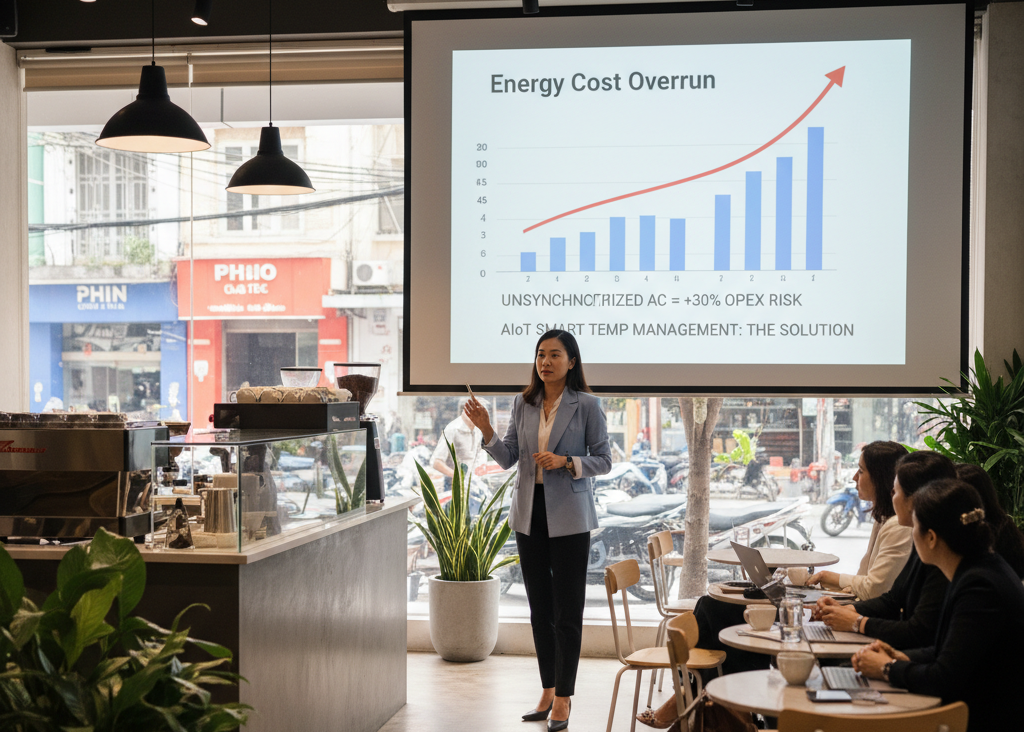
1. What truly makes electricity costs a burden for coffee shop chains?
The Surge in Energy Costs in a coffee chain not only depend on weather or electricity prices but are also significantly influenced by the management and operation of the air conditioning system at each branch.
A common problem is manual and unsynchronized operation. Many stores still adjust air conditioning based on staff experience, leading to differences in temperature settings and on/off times between branches. Turning on the air conditioning too early, turning it off too late, or setting the temperature suboptimally can waste electricity and increase overall system costs.
Additionally, the lack of centralized monitoring data makes it difficult for businesses to effectively control electricity consumption. When relying solely on monthly electricity bills, chain owners often only detect cost increases after they have occurred, rather than identifying anomalies early for timely adjustments. This limits the ability to implement energy-saving solutions based on real data.

2. Impact of rising electricity costs on chain operations and development strategy
2.1 Direct impact on profit and cash flow:
Rising electricity prices increase operating costs, eroding profit margins for each point of sale and the entire system. This is evident in electricity-intensive industries. For example, According to cafeF 2024, Hoa Phat Group, with a consumption of 2.67 billion kWh in 2023, incurred an additional 26-30 billion VND in electricity costs when electricity prices increased by 4.8%. Similarly, Duc Giang Chemicals Group saw an additional cost of nearly 90 billion VND with a consumption of 922 million kWh.
In the cost structure of steel and chemical manufacturing businesses, electricity accounts for about 9-10% of the cost of goods sold. Although electricity consumption in coffee shop chains is on a smaller scale, when multiplied by a large number of locations, rising electricity costs still create direct pressure on cash flow. This is particularly important given the thin profit margins in the F&B industry.
2.2 Difficulties in synchronized operational management and branch performance:
In a chain of stores, the beverage preparation area is often the largest consumer of electricity, including equipment such as coffee machines (1.5-3 kW), coffee grinders (0.5-1 kW), ovens (1.5-2.5 kW), and air conditioning systems (1-5 kW). Without centralized data and strict monitoring, chain owners struggle to identify sales points with abnormal consumption, cannot compare performance between branches, leading to a lack of basis for resource allocation or operational optimization decisions. The consequence is widespread discrepancies in energy efficiency and costs, causing financial instability among sales points.
2.3 Decreased customer experience quality and employee productivity:
Inefficient air conditioning leads to unstable temperatures, affecting customer satisfaction and the employee working environment. Meanwhile, urban consumers in Vietnam, despite real income being pressured by inflation and rising living costs, still maintain a “self-rewarding” behavior with chain coffee spending at popular prices ranging from 40,000-70,000 VND per visit. If a stable experience is not ensured, customer retention will decline. At the same time, a less than ideal working environment also affects employee productivity, creating opportunity costs for operational efficiency.
2.4 Barriers to expansion and sustainable development goals:
When electricity costs remain high and unchecked, coffee chains face difficulties in forecasting operating costs when expanding to new locations. This increases financial pressure and reduces the effectiveness of growth strategies. In reality, many brands are shifting towards cost optimization, such as Starbucks expanding its products at more accessible price points, while Highlands and Phuc Long focus on core beverage categories to control operating costs. In the context where sustainable development and ESG standards are increasingly emphasized, energy waste not only increases costs but also affects brand image and the ability to meet future green requirements.
3. Common electricity cost control solutions and their limitations
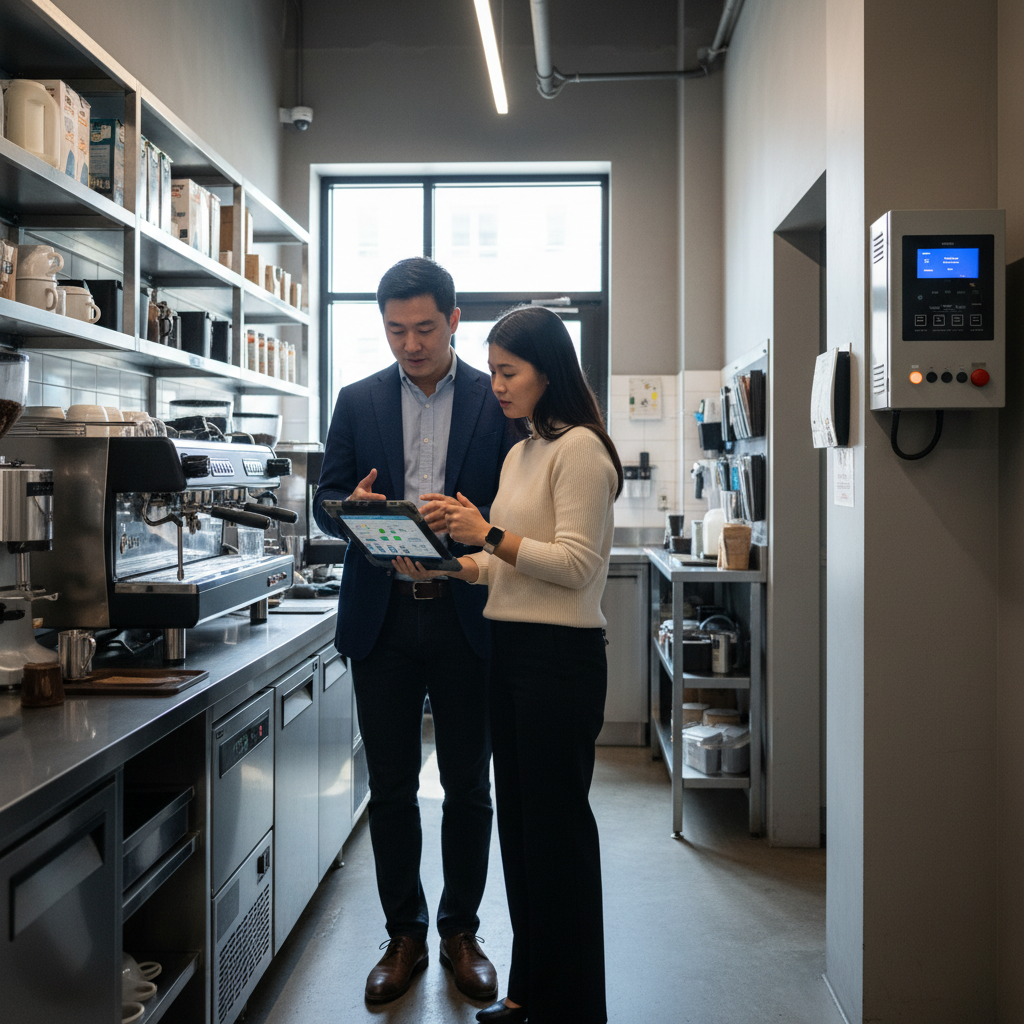
In operating multi-branch coffee chains, businesses often apply several solutions to control electricity costs, but their effectiveness remains limited as the system expands.
The most common method is manual control through internal regulations, such as setting equipment usage hours or air conditioning temperature rules at the store. However, this method relies heavily on operating staff. When personnel change shifts or multiple branches operate simultaneously, compliance can easily deviate, leading to manual switching of equipment and potential electricity waste.
Another set of solutions focuses on upgrading air conditioning equipment, cooling systems, or replacing traditional light bulbs with LEDs, with the goal of reducing electricity consumption. For cooling systems, this is the largest electricity-consuming item in retail chains, and upgrading can help save costs. However, these solutions do not provide the ability to aggregate consumption data or centralize monitoring across the entire system.
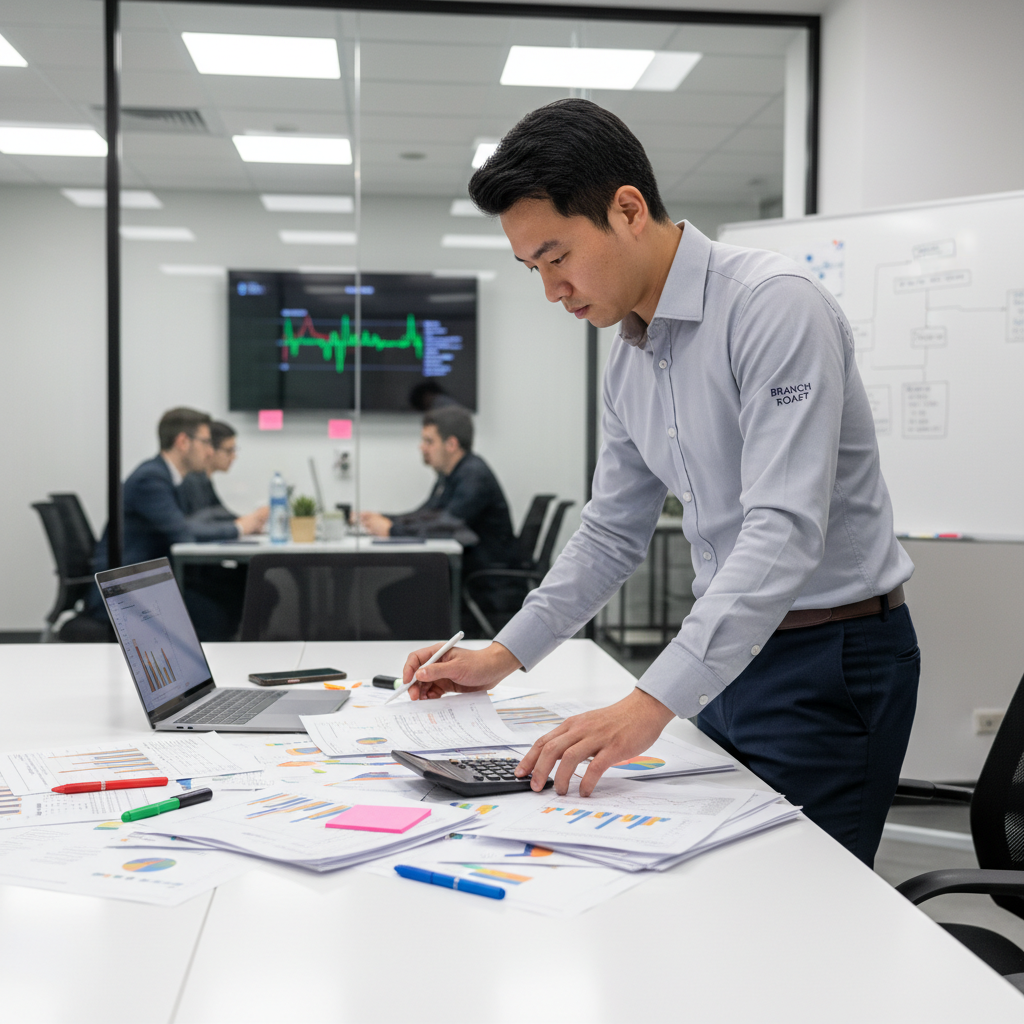
Another approach is to periodically monitor electricity bills between months and stores to detect unusual expenses. However, electricity bills only reflect aggregated past data and do not support timely action. Comparing between facilities also poses difficulties because bills do not specify causes and are affected by many external factors such as electricity pricing policies (e.g., Decision No. 1279/QD-BCT of 2025 by the Ministry of Industry and Trade) or customer fluctuations at different times.
In general, traditional methods lack automation and real-time monitoring capabilities. This makes it difficult for businesses to effectively control electricity costs as the system expands and the need for operational optimization grows.
4. Effective and practical temperature control methods for coffee chains
To control the Surge in Energy Costs with air conditioning systems, coffee chains can implement various methods based on technology, practical data, and standardized operating procedures to optimize energy consumption efficiency across the entire system.
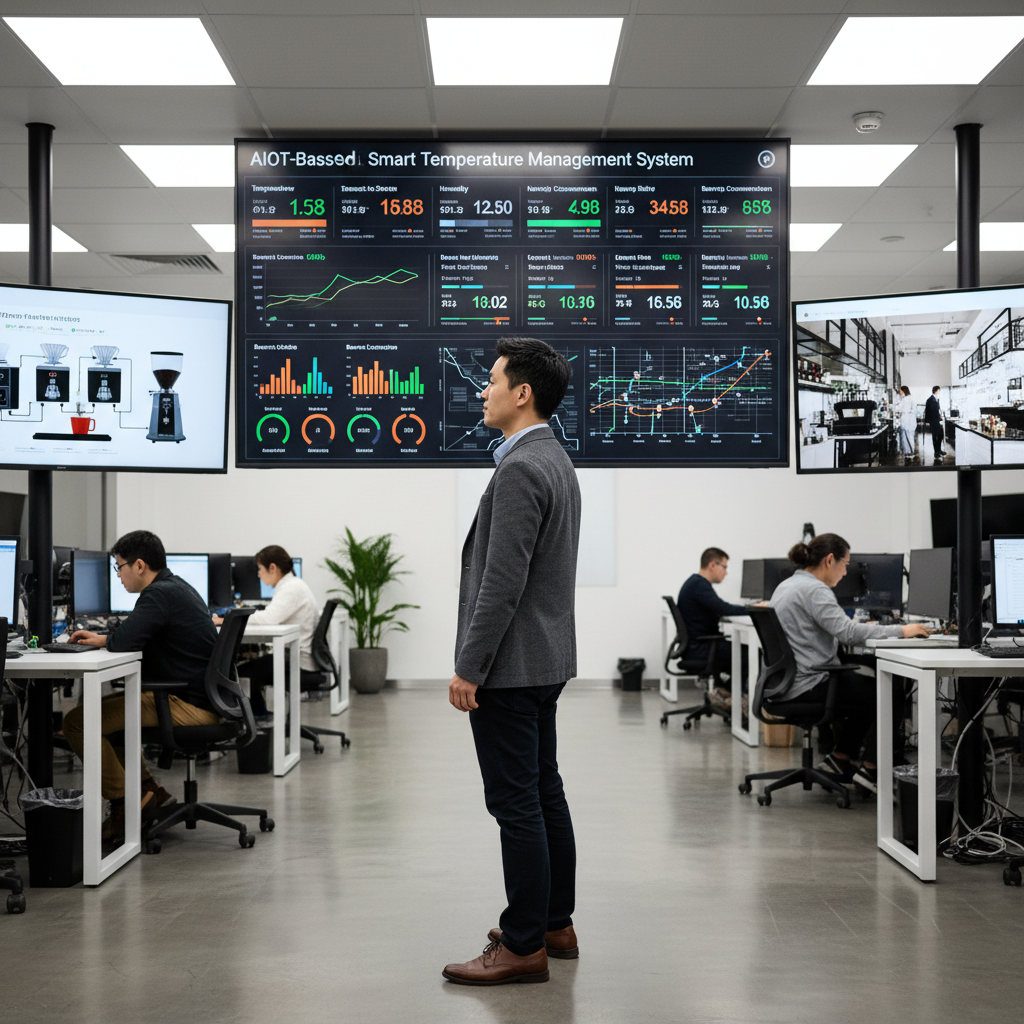
An AIoT-based smart temperature management system is a model that integrates automatic monitoring, analysis, and control of air conditioning through the combination of artificial intelligence and IoT sensors. By continuously collecting real-time data on temperature, humidity, customer density, and equipment status, this system optimizes settings based on historical data analysis, current conditions, and the external environment. Operators gain centralized monitoring and remote control capabilities for all branches, ensuring consistent energy efficiency.
Simultaneously, AI can detect operational anomalies, helping to identify unusual electricity consumption points or technical faults early and providing alerts for immediate resolution. Providing monitoring data for each device and each branch creates a transparent platform for optimal decision-making and evaluating the effectiveness of energy-saving initiatives in the operational chain.
Regarding the correlation between initial investment and impact level, staff training requires low to medium resources and yields clear short-term results. Regular maintenance programs require a medium level of effort with high, stable long-term energy saving efficiency. Meanwhile, AIoT smart management systems require a larger initial investment and deployment but provide continuous optimal efficiency in the long term, contributing to achieving sustainable operational optimization.
5. Why is Mekonglink’s AIoT-based smart temperature management system suitable for coffee chains?
The AIoT-based Smart Temperature Management System is suitable for coffee chain models due to its ability to monitor and optimize air conditioning systems across multiple stores simultaneously. For small and medium-sized chains, the system helps standardize air conditioning operations between branches, reducing reliance on manual staff operations. Business owners can monitor and adjust equipment remotely through a centralized management platform, thereby saving inspection time and controlling electricity costs more effectively. Furthermore, the solution can be quickly deployed without requiring major changes to existing infrastructure, making it suitable for chains in the expansion phase.
For large-scale chains, the AIoT-based Smart Temperature Management System allows for centralized management of the entire air conditioning system from a single platform. Real-time operational data helps managers track electricity consumption for each store, thereby identifying high energy usage areas for timely adjustments. The system can also analyze factors such as weather or customer density to automatically adjust temperatures accordingly.
Thanks to its capabilities for monitoring, remote control, and data-driven operational optimization, the AIoT-based Smart Temperature Management System helps coffee chains reduce energy costs, maintain a stable customer experience, and enhance long-term operational efficiency.

Rising electricity costs, especially from air conditioning systems, are not just a temporary concern but a hidden financial risk for coffee chains in Vietnam. The root of the problem lies in manual, unsynchronized operations and the lack of centralized monitoring data. This not only erodes profits but also affects expansion capabilities and sustainability. However, by implementing data-driven and automated temperature management solutions, chain owners can completely optimize costs, enhance operational efficiency, and protect long-term profits.
👉Do you want to better understand the potential for electricity cost savings and optimize the operation of your coffee chain’s air conditioning system? Sign up to participate in a PoC (Proof of Concept) with our solution to evaluate its real effectiveness yourself.
——————————————–

☎️ Contact information:
1. Email: Community@mekonglink.asia
2. Website: mekonglink.asia
3. International phone: (+84) 02888868685
4. Vietnam phone: (+84) 364689922 (+84) 364689911


Responses