

1. The Growth Paradox: Why ASEAN’s Economic Success Is Not Everything?
It is undeniable that ASEAN is one of the fastest-growing economic hubs in the world, with a combined GDP expected to reach around USD 4.08 trillion in 2025, showing a strong recovery after the pandemic. According to a report by VNTR – Vietnam’s Ministry of Industry and Trade, the region’s real economic growth is projected to remain at 4.7% during the period 2024–2029. These figures not only reflect ASEAN’s economic dynamism but also affirm its breakthrough potential and its increasingly important role on the global economic map.

However, behind these impressive numbers lies a paradox: rapid development is creating enormous pressures on Environment, Society, and Governance (ESG). Traditional cooperation models, while once effective, now appear fragmented and insufficient to tackle multidimensional challenges that require stronger connections. Specifically:
- The Green Growth Dilemma in Technology: At COP26 in Glasgow, 9 out of 10 ASEAN member states committed to reaching net zero emissions by 2050. This creates a direct conflict: how can countries industrialize while at the same time protecting the environment and responding to climate change?
- Human Resource Challenges: According to a report by the International Labour Organization (ILO), about 40% of ASEAN workers face a skills mismatch with their jobs. This leads to reduced labor productivity and difficulties for businesses undergoing digital transformation.
- Innovation Effectiveness: According to the Communist Review on research transfer, only about 5%–10% of research projects are actually applied to production and business. This raises the question: how can scientific research move beyond paper and be transferred and commercialized quickly and effectively?
Traditional cooperation models, such as university–industry partnerships or public–private collaborations, have contributed to development in the past, but today they are not sufficient to meet sustainability demands or create wide-reaching social impact.
That is why ASEAN needs a new cooperation model that links multiple stakeholders together, generating collective strength to achieve sustainable development and real value for communities. This is exactly the role of the UICG Model.
2. What is the UICG Model (University – Industry – Community – Government)?
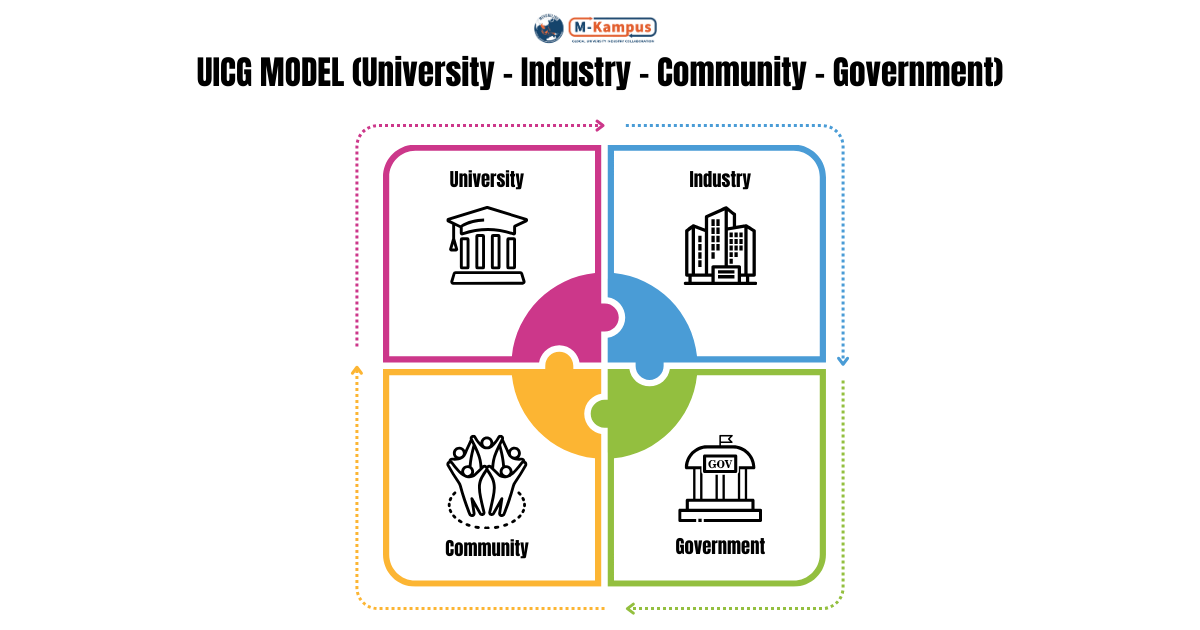
UICG stands for University – Industry – Community – Government, an innovation ecosystem where the four key pillars of society no longer work in isolation but collaborate closely to address complex challenges and create sustainable value.
2.1 Core Differentiation: The Power of the “C” – Community
Unlike previous cooperation models such as University–University or University–Industry, the inclusion of Community at the center is the breakthrough of the UICG model. The “C” transforms the model from a tool for pure economic growth into a driver of sustainable social value creation. The community is no longer a passive beneficiary but an active partner – providing real-world problems and serving as the final evaluator of the effectiveness of innovation.
3. Why is UICG important? And the 4 core benefits it brings
The UICG model creates a circular value system, where each party not only gains benefits for itself but also contributes to the shared success of the entire ecosystem.
3.1 Universities (Korea & ASEAN)
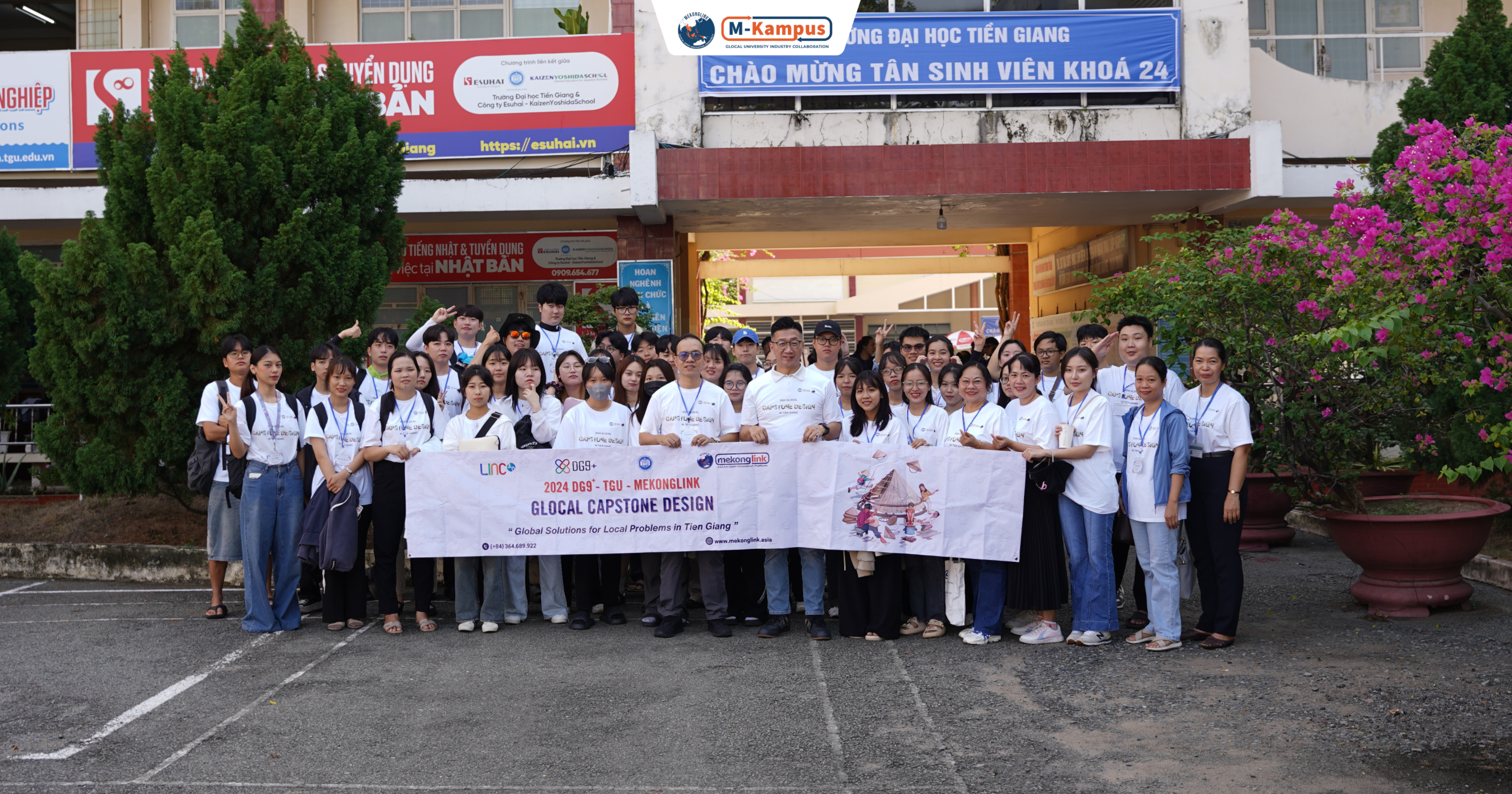
Universities can access Glocal Capstone Camps – where students and professors work together to solve local problems; Bootcamps – short-term programs focusing on practical skills for students; and joint research projects that connect academia with real-world needs. At the same time, opportunities for talent exchanges and dual-degree programs expand students’ future pathways and strengthen institutional reputation.
Through this, universities not only elevate their status but also create a clear Glocal impact, effectively bridging global knowledge with local realities.
3.2 Industry and Solution Providers (Korea & ASEAN)
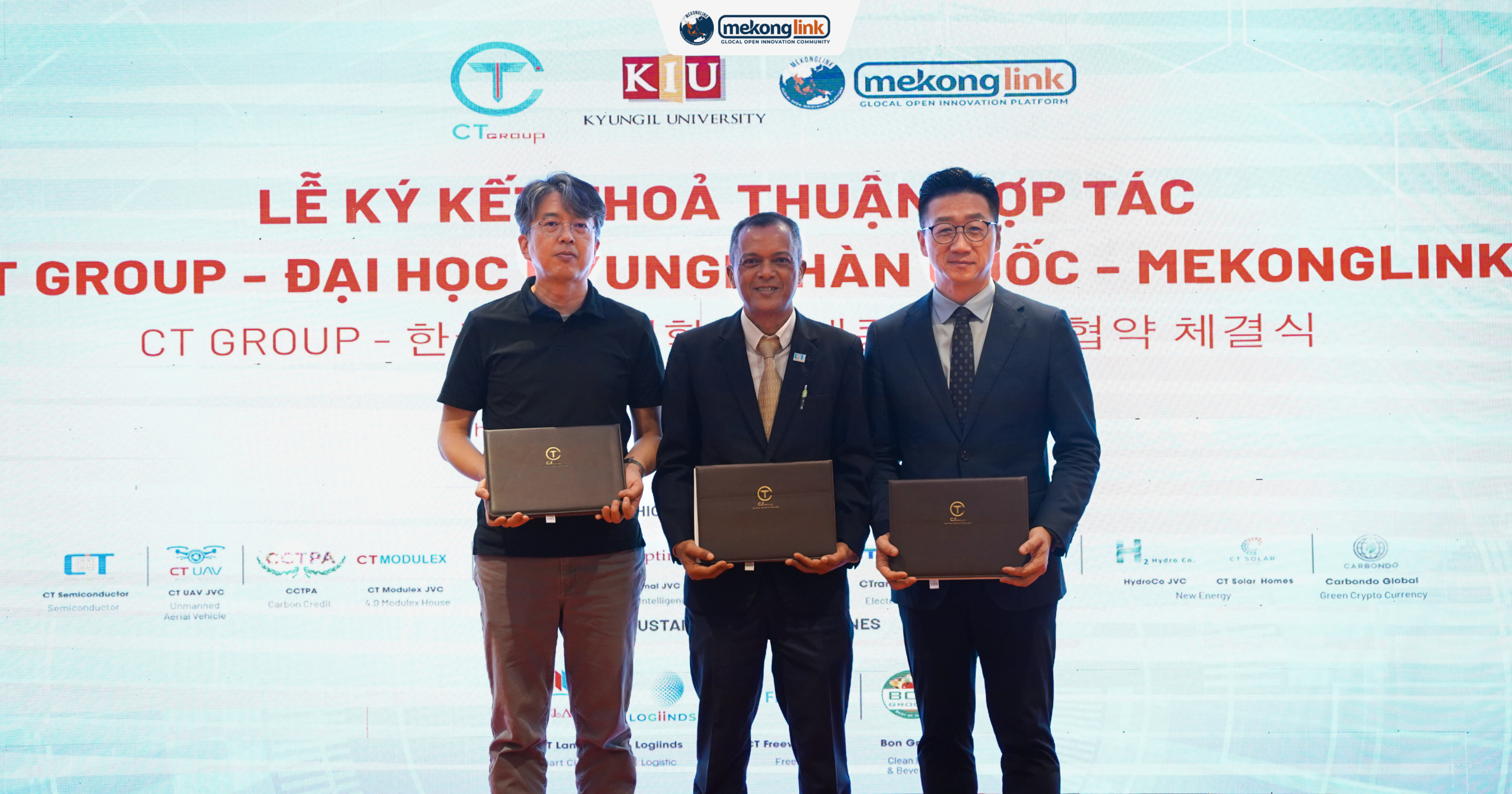
Businesses can localize technology through practical Proof of Concept projects, thereby shortening the process from idea to product commercialization. Co-innovating with communities and organizations not only generates social impact but also strengthens the company’s image as a sustainable innovation leader.
3.3 Local Communities & Civil Society (ASEAN)
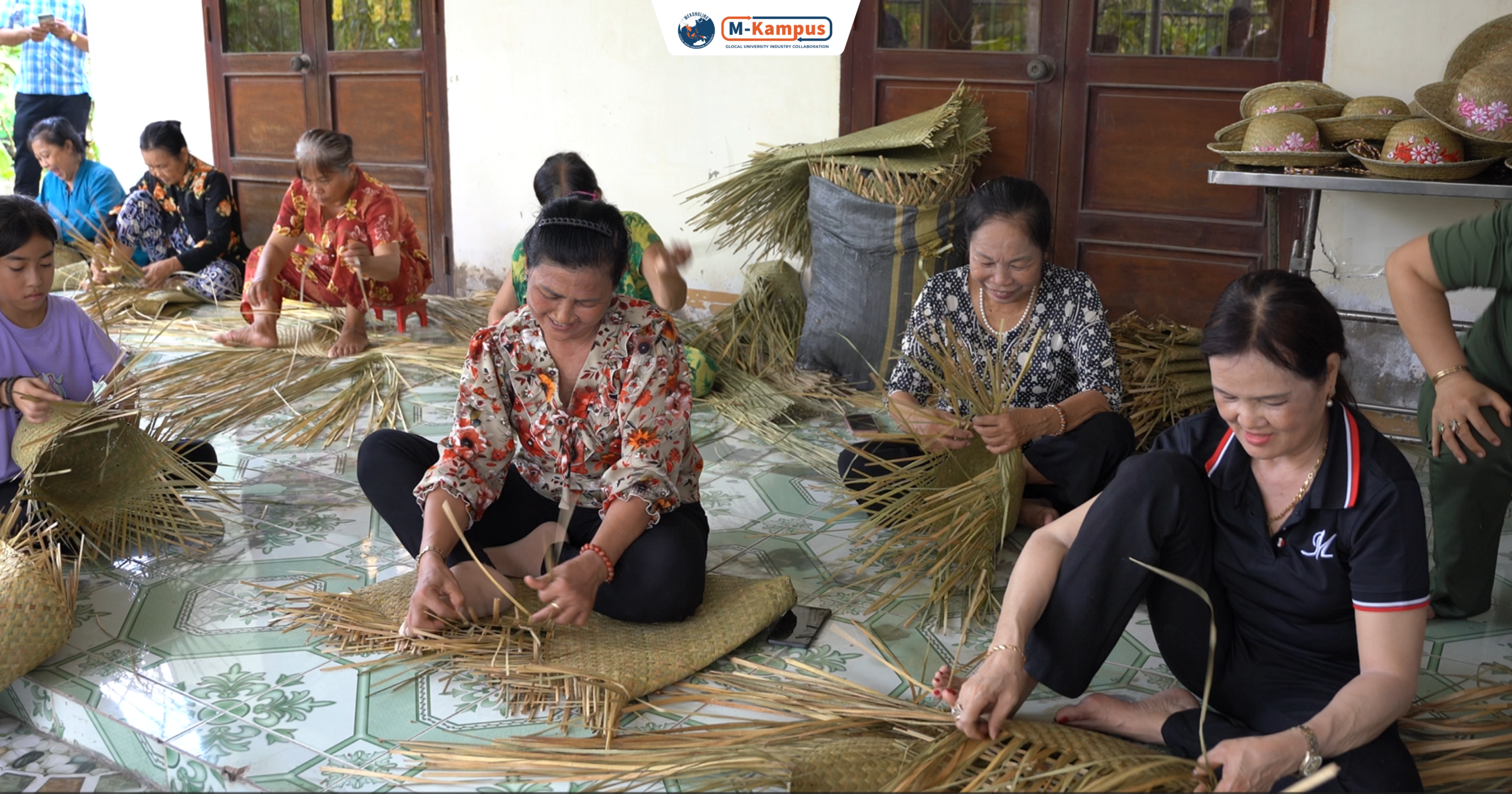
Communities directly participate in Living Lab projects, adopting technologies and knowledge tailored to local conditions. These solutions not only address urgent issues such as healthcare, agriculture, and energy but also empower people, enabling them to become active partners in the journey toward sustainable development.
3.4 Local Governments & Research Institutions (Korea & ASEAN)
Governments and research institutes can co-design ESG projects with trusted partners, ensuring feasibility and effective implementation. Through localization support and capacity-building programs, this model delivers scalable outcomes aligned with public policy directions and national sustainable development goals.
4. ESG Living Lab in Tien Giang: A Case Study of the UICG Model in Vietnam
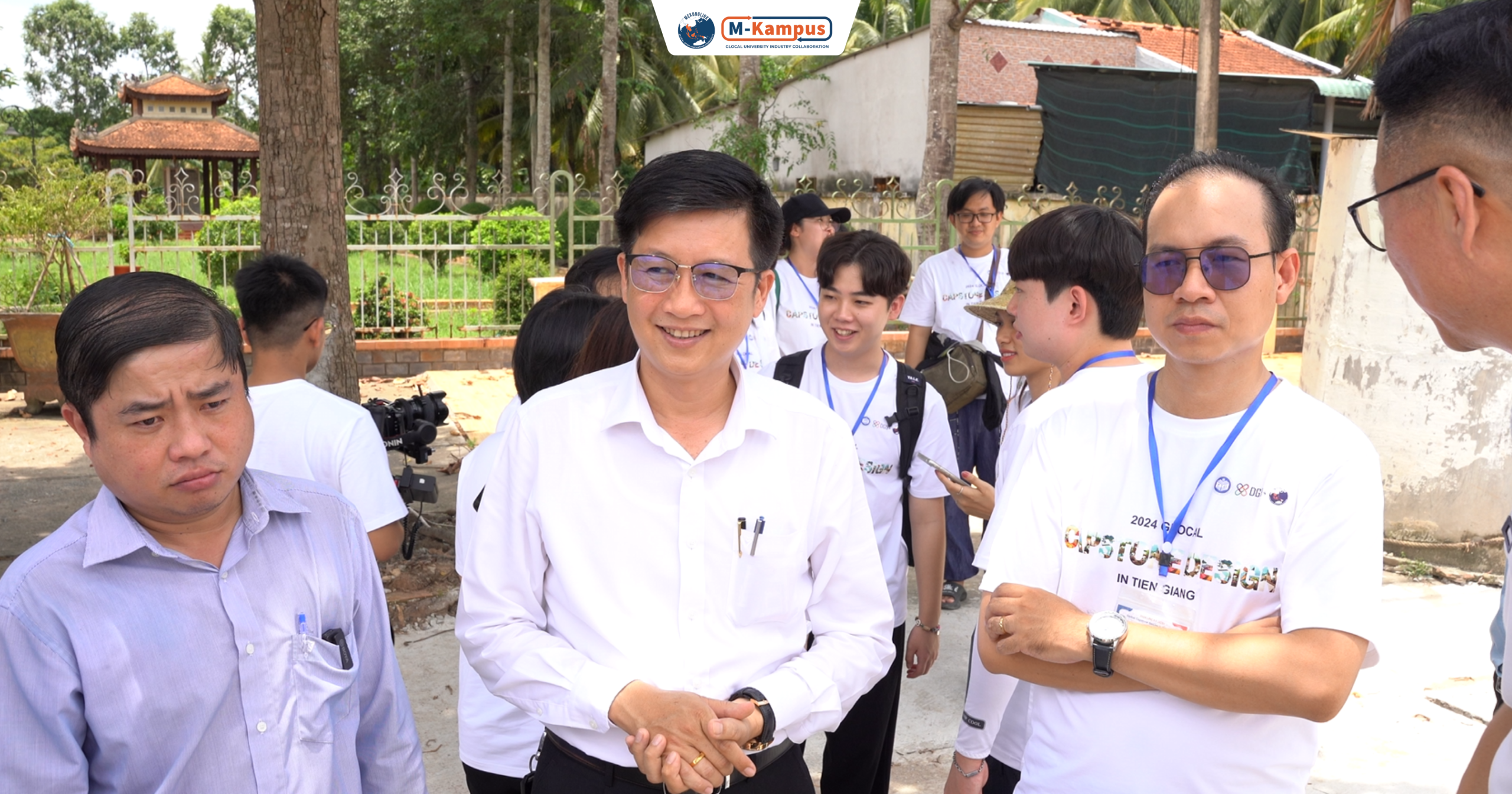
Tien Giang Province is facing severe riverbank erosion, directly threatening the livelihoods, production, and transportation of local residents. Although the province has invested hundreds of billions of VND in concrete embankments – such as the Kenh 28 embankment, 2.67 km long with an investment of 249 billion VND – many sections have still collapsed after construction. This shows that current solutions remain limited, especially in areas where natural protective forests no longer exist.
This is where the ESG Living Lab for Community Innovation in Tien Giang, implemented by M-Kampus, applies the UICG model in practice:
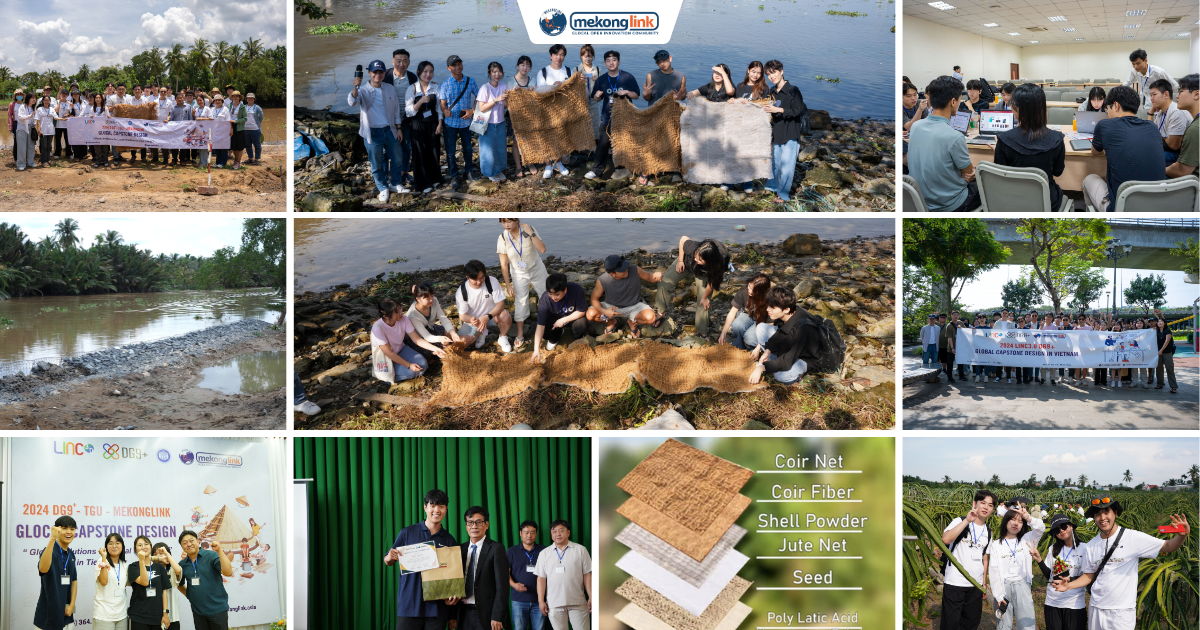
- University: 62 students from 9 Korean universities, together with lecturers from Tien Giang University, visited riverbank sites to conduct geological surveys, assess the situation, and propose initial ideas.
- Industry: HOJEONG (Korea) took on the core role of developing and refining the solution, turning ideas into practical and effective outcomes.
- Government: The Tien Giang provincial government acted as a bridge, encouraging and mobilizing local people to participate.
- Community: Local residents, as those directly affected, provided real-world difficulties, shared the status of erosion, and contributed insights to improve the solution.
From this collaboration, the team proposed the “Vegetation Mat Against Erosion”, a “soft” method using local plants with deep and wide roots. The mat acts as a natural net, binding soil and roots together to protect riverbanks from water flow while helping restore the natural ecosystem.
Key advantages over traditional concrete embankments:
- Environmentally friendly: The solution does not disturb ecosystems and helps restore protective riverbank forests.
- Low cost & easy maintenance: It uses locally available seeds, adapts well to local conditions, and is affordable to produce and maintain.
- Community engagement: Simple construction allows residents to participate directly, creating shared ownership and sustainability.
- Scalability: The vegetation mat can be flexibly applied across various erosion sites, from small sections to long river stretches.
Although still at the proposal stage, the project has opened a new, more sustainable, and human-centered pathway compared to traditional concrete embankments. This case clearly demonstrates how the UICG model can connect global knowledge with local wisdom, creating practical, innovative, and sustainable solutions for communities.
5. So How Can You Build an Effective UICG Collaboration Model?
Understanding and building an effective UICG model requires connecting the right partners and following a well-structured strategy. If your organization is seeking a new path to create greater impact and achieve sustainable growth, start with these three steps:
- Define core goals and challenges: What specific problems do you want to solve? What outcomes do you aim to achieve?
- Find and connect with the right partners: Who are the potential players in the other three sectors that share your vision?
- Build mechanisms for operation and measurement: How will all parties coordinate, share responsibilities, and measure impact together?
This journey becomes much easier with an experienced partner. M-Kampus, with its deep expertise and hands-on experience in implementing UICG projects, acts as a bridge to help you design the most suitable collaboration model.
Every challenge can only be solved through collective effort and shared vision. M-Kampus is the catalyst that brings UICG from theory into practice, creating sustainable change for communities. This journey has already begun, and M-Kampus is always ready to walk alongside those who share the aspiration to build practical, sustainable, and human-centered solutions.
________________________________________________

- ☎️ Contact information:
- Email: Community@mekonglink.asia
- International phone: (+84) 02888868685
- Vietnam phone: (+84) 364689922 (+84) 364689911
- Website: Mekonglink.asia


Responses