

1. Root Causes of Sediment Reduction and Riverbank Erosion in the Mekong River
Large hydropower projects constructed in the upper Mekong region have significantly impacted downstream sediment transport. According to satellite imagery analysis by EOMAP in collaboration with Reuters, each dam on the Mekong River retains an average of up to 81% of the sediment that would otherwise flow through these locations.
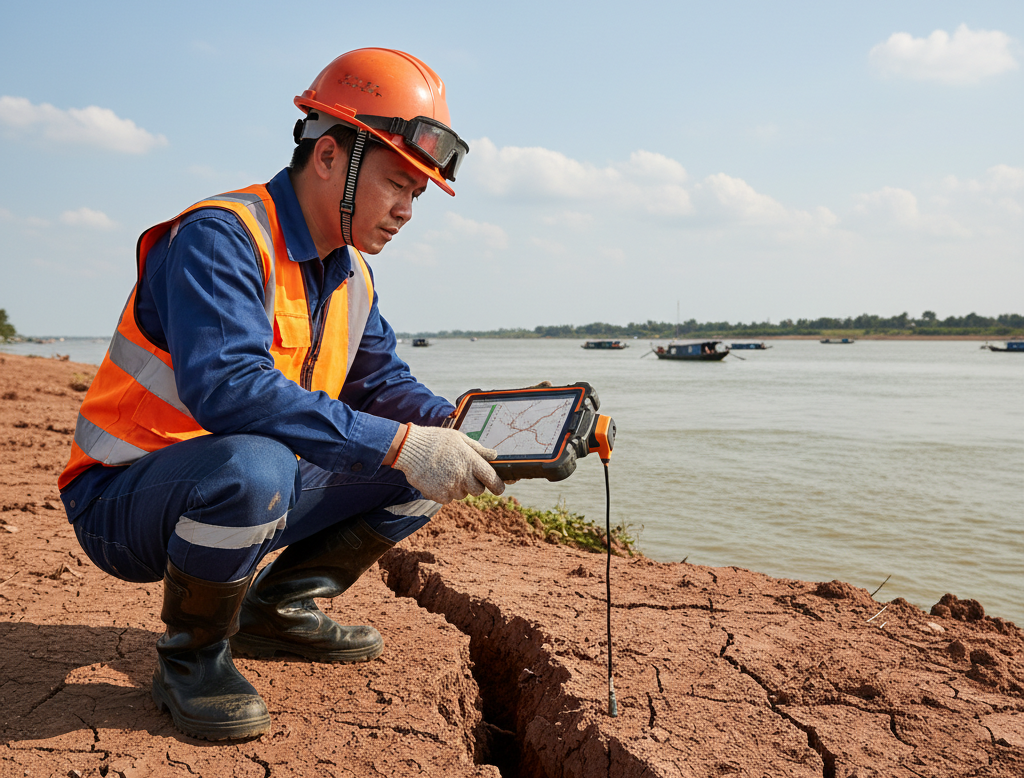
Other studies indicate that the lower Mekong River, which once carried 160-170 million tons of sediment annually, now carries only about 30-40 million tons, a reduction of approximately 70-80%. The direct consequence is an insufficient supply of material needed for riverbank accretion and stabilization, which accelerates erosion processes in downstream areas, especially in the Mekong Delta. This has also been confirmed by Vietnam Television (VTV), indicating that the dam system on the mainstream has led to a reduction in silt and sand, causing severe landslides throughout the Delta region.
1.1 Hydrological and Runoff Changes
The emergence and operation of large dams such as Jinghong, Xiaowan (China), and Xayaburi (Laos) have led to drastic fluctuations in the Mekong River’s natural hydrological conditions. Analysis by Duy Tan University indicates that the operation of these dams has altered water flow, reduced sediment transport, and negatively impacted fisheries resources, community livelihoods, and ecosystem stability in downstream areas. Concurrently, the Mekong River Commission (MRC) has also documented a significant decrease in sediment volumes measured at monitoring stations, leading to unstable riverbanks and coastal erosion. The long-term sediment deficit makes riverbank soil structures fragile and highly susceptible to erosion and severe landslides.
1.2 Factors Increasing Erosion Risk
In addition to the primary impacts of hydropower projects, illegal or uncontrolled sand mining activities also undermine the natural protective layer of the riverbed, exacerbating erosion. Furthermore, climate change, including rising sea levels, more intense storm floods, and altered rainfall patterns, continues to place additional stress on the river system, accelerating erosion and landslide processes in many downstream areas. These combined effects render the Mekong riverbanks increasingly unstable, posing significant challenges to conservation and restoration efforts in riparian regions.
2. Consequences of Riverbank Erosion and Landslides on Operations and Development Strategies
2.1 Economic and Social Impacts
The financial burden on governments and local authorities is growing heavier as budgets must prioritize landslide prevention and management, thereby limiting resources for other development projects. In the Mekong Delta, coastal erosion annually causes the loss of hundreds of hectares of land and forces many families to relocate from hazardous areas. The consequences are not only property loss but also impacts on social security, community structures, and the direction of long-term local development planning.
2.2 Strategic and Long-term Risks
The scale and evolution of erosion and landslides in key areas pose long-term challenges for the Delta. As coastal protective forest belts shrink, coastal erosion in many places has advanced to the foot of dikes, and climate change adaptation capacity is declining. This situation not only affects riverbank and coastal ecosystems, leading to a decline in biodiversity, but also puts pressure on sustainable development goals, disaster risk mitigation, and local resource and environmental management capabilities.

3. Traditional Solutions and Why They Are Inefficient
Traditional solutions such as concrete revetments and rigid structures are widely used for riverbank protection but have revealed numerous limitations in practical application. Some construction methods, such as directly dumping rocks without a filter layer, can lead to voids in the revetment foundation, causing settlement, collapse, and reducing the stability of the structure. Furthermore, solutions like vertical walls or sloped revetments require heavy equipment, are difficult to deploy in areas with limited access, and increase land acquisition costs. Some structures also suffer from uneven settlement or localized deterioration.
Meanwhile, traditional tree-planting methods have not proven effective in severely eroded areas. Seedlings struggle to take root in fragile soil and strong currents, and they do not provide immediate protective effects. Despite their lower cost, these solutions are often slow to show results and cannot meet the demand for urgent erosion control.

4. Vegetation Mat Technology: A Riverbank Erosion Control Solution Replacing Hard Revetments
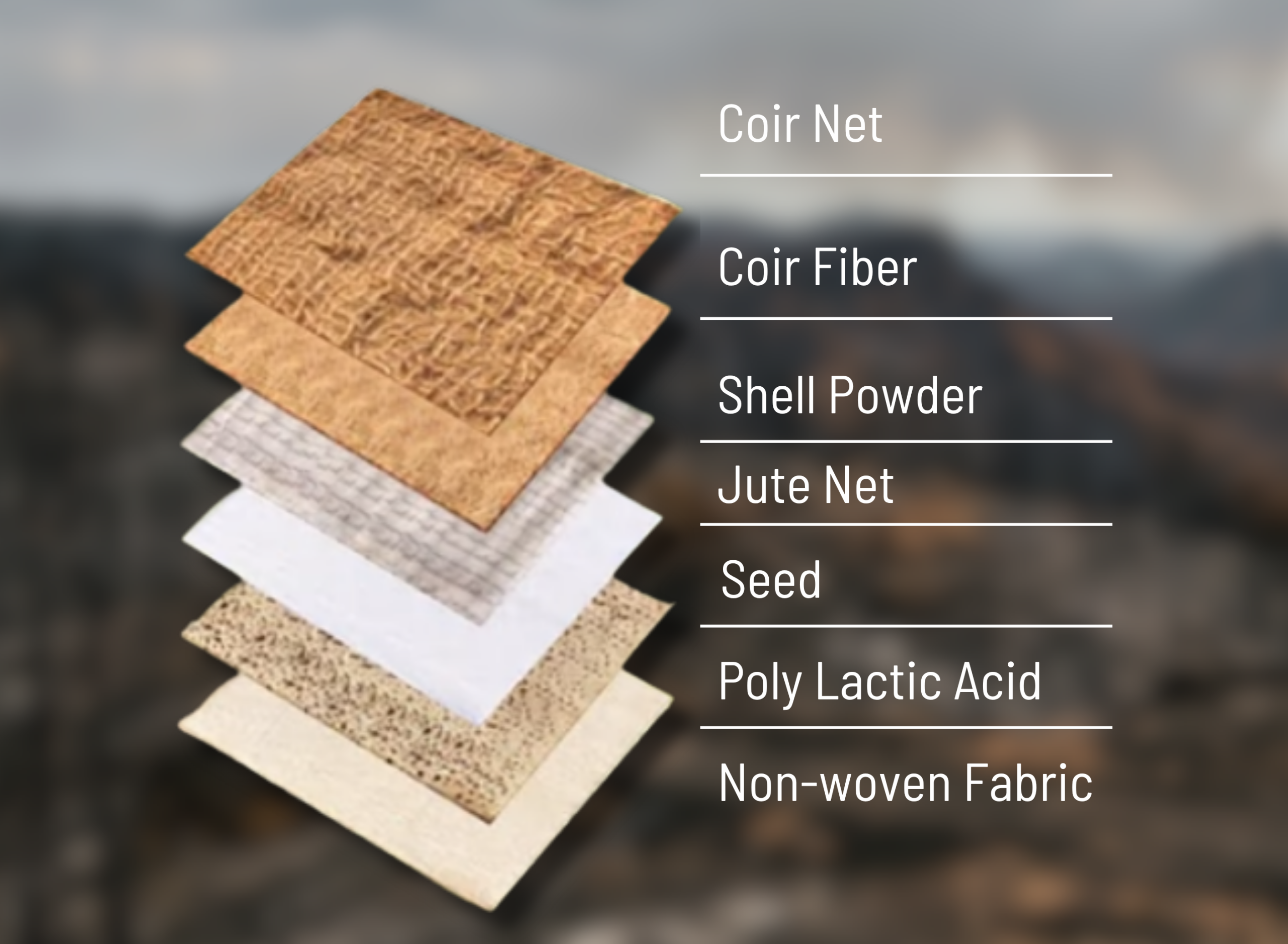
Vegetation Mat technology opens up a practical approach for controlling erosion along waterways and restoring ecosystems. This mat uses biodegradable materials, combining natural fiber structures and seeds to provide an immediate protective layer for the surface while supporting plant growth in the early stages. A distinctive feature of this technology is its active erosion control achieved through a fixed covering structure and the biological properties of the materials, which helps promote plant root growth and enhance long-term soil stability.
Actual records from the Đồng Tháp province in 2017 show significant growth of vegetation mats after 7-9 weeks, with continued effectiveness after 6 months of deployment. This technology is particularly suitable from economic, social, and environmental perspectives because it optimizes life cycle costs, reduces emissions compared to traditional solutions, and contributes to restoring the Mekong River ecosystem.

5. Reasons Why Vegetation Mat Technology is Suitable for Public Infrastructure Management
Vegetation Mat technology is suitable for public infrastructure management because it simultaneously meets environmental requirements, feasibility, and practical deployment efficiency. One of its key advantages is its compatibility with existing standards and management guidelines. The technology has received Green Technology certification from the Ministry of Environment, indicating that the solution meets basic environmental standards and adapts to climate change. This provides more favorable support for the review, implementation, and fundraising of green projects.
Furthermore, this technology holds significant value in terms of sustainability. The product uses biodegradable PLA non-woven fabric, which helps reduce waste pressure compared to many traditional materials. At the same time, this solution also supports the restoration of natural vegetation, improves surface stability, and contributes to sustainable development goals.
Another notable feature is that the technology has practical case studies available for reference. Pilot projects in Đồng Tháp and Tiền Giang provinces demonstrate the applicability of this solution under real-world conditions in Vietnam, thereby laying the groundwork for proper evaluation and widespread adoption.
Once the vegetation mat grows stably, it forms a natural protective layer, which helps reduce the risk of erosion in riverbanks and canal areas, and supports enhancing the resilience of public infrastructure against environmental changes.
6. Sustainable Direction for Mekong Riverbank Protection
Severe sediment reduction caused by upstream hydropower projects is leading to significant riverbank erosion and landslides in the lower Mekong, incurring heavy economic, environmental, and social losses. Addressing this issue requires a comprehensive, sustainable, and environmentally friendly approach. Traditional solutions are no longer sufficient to cope with the scale and complexity of current challenges. Instead, a shift towards green infrastructure solutions, particularly vegetation mat technology, combined with the application of master planning and monitoring technologies, will be key to effectively and sustainably ‘repairing’ and protecting the Mekong riverbanks, bringing long-term benefits to communities and ecosystems.
👉 Enhance the resilience of Mekong riverbanks and protect communities through sustainable green infrastructure solutions. Learn more about Vegetation Mat technology, certified as green technology by the Korean government, and join us in building a green future for the region.
Leave your information here to receive direct consultation and support from the Mekonglink team!
—————–

☎️ Contact Information:
1. Email: Community@mekonglink.asia
2. Website: mekonglink.asia
3. International Phone: (+84) 02888868685
4. Vietnam Phone: (+84) 364689922 (+84) 364689911


Responses