

1. Practical Issues Challenging Green Infrastructure in ASEAN
1.1 Geological and Hydrological Diversity
ASEAN’s diverse natural foundation creates numerous challenges for green infrastructure, from subsidence in lowlands, steep hilly terrain, to strong impacts from coastal waves and storm surges. The flow of river systems like the Mekong also fluctuates seasonally and is affected by hydropower dams, making conditions increasingly difficult to predict.
Therefore, solutions need to be designed to suit each local context, rather than applying a general model. At the same time, technical, legal, and financial limitations in some countries like Indonesia and the Philippines continue to increase difficulties in the implementation process (Vneconomy, 2024).
1.2 Continuous Pressure from a Harsh Environment
The characteristic humid tropical climate in ASEAN leads to heavy, prolonged rainfall and frequent extreme weather events such as storms and floods. The increasingly frequent and intense climate changes also put all infrastructure projects under continuous pressure from erosion and localized flooding. To cope with these fluctuations, green infrastructure solutions must have adaptable and resilient capabilities. However, in many countries like Indonesia and the Philippines, infrastructure capacity remains a major obstacle to deploying renewable energy technologies, reducing proactivity in adapting to environmental risks.
1.3 Lack of Localized Data
The design and decision-making process for green infrastructure in ASEAN currently relies heavily on general data, while lacking detailed localized data such as geological and hydrological characteristics, flow regimes, erosion rates, or soil bearing capacity. This makes assessing effectiveness and selecting appropriate solutions less accurate.
Professionally, many projects have not adequately integrated interdisciplinary knowledge, especially the combination of engineering, natural ecosystems, and local socio-economic contexts. At the same time, not leveraging the perspectives of experts with specialized knowledge and understanding of field conditions also leads to many limitations in adjusting solutions according to real-world conditions.

2. Consequences When Green Infrastructure Solutions Do Not Suit Local Conditions
2.1 Low Operational Efficiency and Increasing Financial Costs
When green infrastructure solutions are not suitable for local conditions, their effectiveness is often limited, leading to technical, operational, and financial problems. Many projects quickly degrade or fail to meet expectations, causing operational disruptions and affecting residents’ lives.
The cause of this issue primarily stems from uncoordinated investment, limited capital, and inadequate operational capacity, preventing projects from fully realizing their functions (Vneconomy, 2024). Furthermore, limitations in cost-benefit calculation data and practical effectiveness lead to stagnation in design and technical standards, making local authorities and investors hesitant to participate in green infrastructure development.
2.2 Long-Term Risks to Investment and Community Trust
Implementing unsuitable solutions not only reduces immediate effectiveness but also creates long-term risks for climate change adaptation strategies. When green infrastructure does not operate as expected, urban areas continue to face flooding, pollution, and increasing environmental pressure, while adjustment, repair, or replacement costs increase over time.
From an investment perspective, this reduces the efficiency of resource utilization, especially as urban land funds become increasingly limited and the demand for infrastructure development continues to rise. In the long run, inefficient or unstable results can also affect community trust and reduce the attractiveness of projects to domestic and international funding sources. In a global context requiring approximately 94 trillion USD for green infrastructure by 2040 according to G20, developing countries increasingly need to choose solutions suitable for local conditions to optimize capital and maintain the ability to mobilize investment.

3. Common But Ineffective Approaches in the ASEAN Context
3.1 Dependence on Imported Technology
Focusing solely on imported high-tech is a common approach in many ASEAN countries, with the desire to utilize new solutions from developed countries in practice. However, most of these technologies are designed for climate, infrastructure, and resource conditions that differ from the humid tropical characteristics, biodiversity, and weak soil of some locations in the region.
This leads to difficulties in operation, maintenance, and training local personnel, resulting in actual effectiveness not meeting expectations. In many cases, the lack of local expert involvement from the design phase makes solutions unsuitable for actual implementation conditions.
3.2 Prioritizing Concrete Structures But Lacking Long-Term Sustainability Under Real-World Conditions
The use of hard engineering solutions such as concrete embankments or retaining walls is highly valued for their ease of control and initial durability. However, in widespread application, these solutions tend to be unsustainable in the long run due to high construction and maintenance costs, lack of environmental friendliness, significant impact on natural ecosystems, and alteration of water flow – thereby increasing erosion in neighboring areas. Limitations of these structures also lie in their ability to adapt to environmental changes and integrate with the local landscape and community.
Analysis from a report by Da Nang University of Science and Technology Journal also pointed out similar limitations. In the Mekong Delta, concrete embankment solutions have been widely applied but have revealed many drawbacks such as high costs, complex construction, and lack of environmental friendliness. Notably, many structures only address the surface without controlling toe erosion, leading to damage after a period. This indicates that concrete solutions are not truly suitable for the weak soil conditions and continuously changing flow characteristics of the region.
4. Practical and Sustainable Options for Green Infrastructure in ASEAN
4.1 Building Green Infrastructure Using Nature-Based Solutions (NbS)
Solutions leveraging the ecological characteristics and functions of nature are being widely applied in ASEAN to address environmental challenges and reduce emissions. For example, planting mangroves to combat erosion, restoring riparian vegetation to stabilize riverbanks, or creating natural wetlands to control floods are all practical examples.
Notably, Indonesia has implemented its National Blue Carbon Action Plan for 2025-2030 (RENAKSI), prioritizing 21 areas to integrate strategic components and establish sustainable financial mechanisms (Antara, 2026). At the same time, the Philippines is implementing detailed guidelines for mapping mangrove, seagrass, and coral reef ecosystems as a basis for identifying key blue carbon project areas. These actions reflect ASEAN’s prioritized NbS approach to balance ecological and economic values.
4.2 Combining Smart Technology with Local Knowledge
ASEAN is increasing its application of AI, IoT, and digital infrastructure to monitor the environment and forecast risks earlier. In the Hanoi Digital Declaration 2026, ASEAN emphasized building resilient digital infrastructure based on AI, IoT, 5G/6G, cloud, and data centers. Concurrently, the ASEAN Smart Cities Network Report 2025 shows that the “Quality Environment” project group accounts for 18% of the total projects, demonstrating that the environment is a clear focus for the region.
In this context, collaboration with local experts plays a supportive role in making the application of technology more effective in practice. They help provide insights into terrain conditions, water flow, ecosystems, and operational methods in each area, thereby contributing to adjusting solutions to better suit the implementation context. This combination helps technology not only be strong in data but also closer to the actual needs of each locality.

5. Choosing Green Infrastructure Solutions Appropriate for Each Project Scale
For small and medium-sized community projects, priority should be given to simple, easy-to-implement solutions that are suitable for local management capacity, such as green roofs, green walls, water retention – filtration – recirculation systems, small ponds, or ecological ditches. In the initial phase, local experts can assist in assessing real-world conditions and providing technical guidance to help the community apply them correctly and maintain long-term effectiveness.
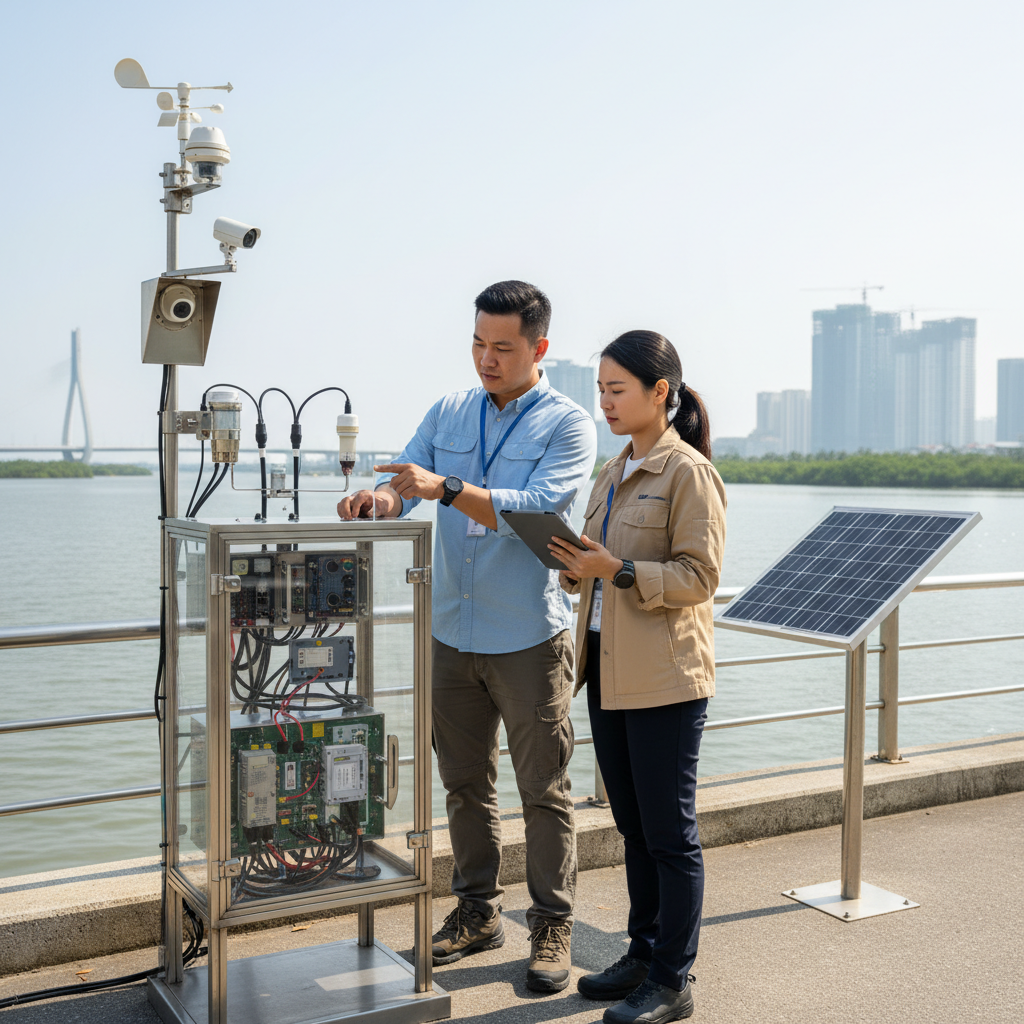
For large public infrastructure projects, it is necessary to combine nature-based solutions with monitoring and management technologies such as environmental sensors, monitoring data, or forecasting systems. In this model, technology helps monitor fluctuations and supports decision-making, while the participation of local experts will help adjust solutions to suit the terrain, water flow, and actual usage needs of each area.
At the planning and policy level, the important role is to create conditions for these solutions to be applied in the correct context, while strengthening coordination among management agencies, experts, and local communities during implementation.

Conclusion: Good Solutions Go Hand-in-Hand with Appropriate Context
It can be seen that most green infrastructure solutions in ASEAN are not optimally effective, not due to a lack of technology or unchanging human behavior, but because they are not suitable for complex local geological, hydrological, climatic, and social conditions. Therefore, a more effective approach is to combine nature-based solutions, supportive technology, and on-site practical knowledge to reduce risks and enhance implementation effectiveness. This is also how green infrastructure projects can create more sustainable long-term impacts.
Discover suitable implementation directions for your project in ASEAN!
If your business is looking for more suitable sustainable solution implementation directions for local conditions, connecting with experienced practitioners will make the assessment process clearer and more effective.
>>> Learn more about M-Expert to find suitable approaches for the ASEAN market here.
—

☎️ Contact information:
1. Email: Community@mekonglink.asia
2. Website: mekonglink.asia
3. International Phone: (+84) 02888868685
4. Vietnam Phone: (+84) 364689922 (+84) 364689911


Responses