

1. Business – university cooperation: Why hasn’t it created real impact yet?
1.1 Reality of cooperation: Many resources but no practical value created yet
Vietnam currently has large research resources with over 1,400 scientific, technological, and innovation tasks. However, the commercialization rate remains limited. For example, at Vietnam National University, Ho Chi Minh City – home to over 250 experts in fields such as AI and biotechnology – the number of successful applied products is still not high (Dân Trí, 2025). This indicates that the link between businesses and university experts is still fragmented and lacks depth.
Currently, common forms of cooperation primarily include:
- Seminars, workshops, networking events
- Short-term pilot projects
- One-off consulting activities
These forms help establish initial connections, but are not enough to transform academic knowledge into practical solutions, nor do they create long-term value for businesses. As a result, businesses still face difficulties in accessing new technologies from research, applying solutions to real operations, and building competitive advantages based on sustainable innovation.
1.2 Reasons why business – university cooperation cannot develop long-term
To understand why cooperation cannot develop long-term, it’s necessary to look at the core barriers in how the two parties connect and implement:
- Gap between academic research and practical application: Reality shows that many research results, after completion, still struggle to find application opportunities, while businesses lack information to access new technologies (Ho Chi Minh City Department of Science and Technology, 2026). This clearly reflects the disparity between technology supply and market demand, making it difficult for research results to enter production – business.
- Differences in objectives and operating methods between the two parties: According to a 2024 study on university – business linkages, the effectiveness of cooperation heavily depends on the ability to communicate, share goals, and foster a culture of cooperation between the parties. Without mutual understanding and agreement, the connection is difficult to sustain.
- Lack of effective connection mechanisms and infrastructure: In the current context, building intermediary platforms such as technology exchanges is considered necessary to connect supply – demand. However, reality shows that this system is still under development and not yet robust enough to support large-scale transfer.
- Finally, there is a lack of mechanisms for measuring and commercializing research results: This makes long-term cooperation difficult. Although there have been many programs promoting university spin-offs, the current goal is only to incubate a few businesses each year, indicating that the transition process from research to market is still limited.

2. What will businesses miss if they don’t cooperate in-depth with university experts?
2.1 Limited access to innovation
When not leveraging cooperative relationships with university experts, businesses primarily rely on internal resources or readily available solutions in the market. This reduces the ability to access new technologies and ideas from academic research, leading to a lack of depth in innovative thinking.
From a financial perspective, businesses have to self-invest in R&D without leveraging the knowledge and facilities accumulated in universities, which can easily lead to increased costs without enhancing competitive capacity. In the long run, businesses find it difficult to keep up with new technological trends, thereby easily losing their competitive advantage.
2.2 Difficulty in creating sustainable and scalable solutions
Lack of academic research involvement often results in businesses implementing short-term solutions, addressing symptoms rather than the root cause of problems.
The consequences are:
- Difficulty in building standardized processes and continuous improvement
- Frequent re-investment due to lack of solution sustainability
- Failure to create long-term value
Strategically, businesses find it difficult to build competitive advantages based on deep knowledge, whereas competitors collaborating with universities can more easily develop scalable innovation models.
2.3 Missing out on implementation resources and talent development
University lecturers are not only researchers but also centers for connecting student communities and research groups. They have the ability to gather, guide, and train human resources according to actual needs through projects.
Failure to connect with universities leads to businesses lacking human resources with up-to-date knowledge and deep expertise, especially in innovative fields. At the same time, students also miss opportunities for practical experience, reducing the quality of future human resources.
As a result, businesses have to increase recruitment and training costs, while in the long run, there is a risk of lacking a successor workforce, affecting competitiveness. Meanwhile, universities are also limited in enhancing practical value and training reputation without cooperation with businesses.
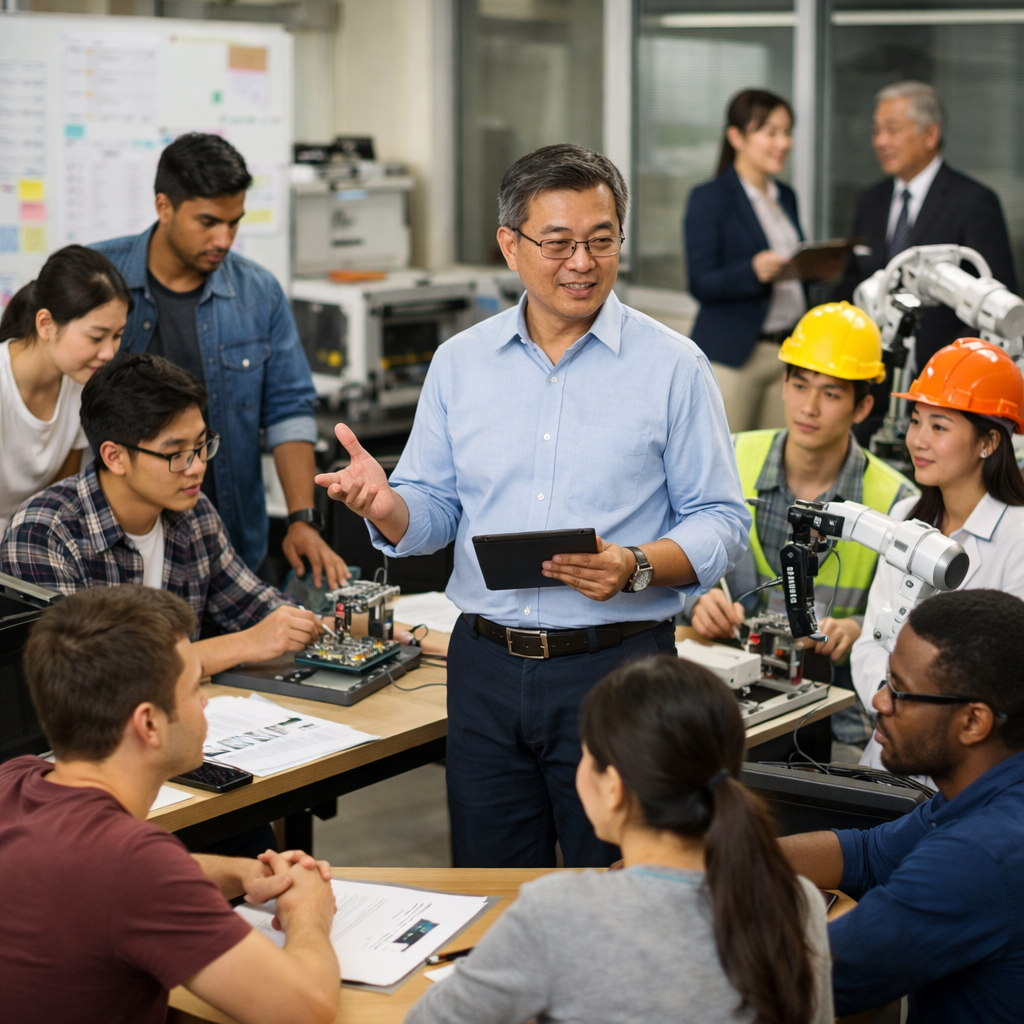
3. Effective cooperation model to “activate” the value of university experts
3.1 Living Lab: Co-developing and testing solutions in a real environment
Living Lab is a practical cooperation model where university experts, businesses, communities, and government jointly participate from identifying ESG issues to implementation and evaluation in a real environment.
This approach helps transform academic knowledge into measurable and deployable solutions. According to the World Economic Forum, cooperation between universities and businesses not only generates ideas but also delivers concrete results. For example, BT, in collaboration with the University of Essex, developed a field scheduling algorithm, enabling an additional 400,000 technical tasks to be completed annually. This practice illustrates the tangible impact of the multi-stakeholder living lab model, where research initiatives are directly applied and yield concrete, large-scale results.
3.2 Multi-stakeholder cooperation: Centering on users and real-world needs
A key element of an effective model is the involvement of multiple stakeholders, with end-users at the center. All parties jointly identify problems, continuously provide feedback, and test solutions, instead of a one-way transfer.
According to the University of Minnesota Clinical and Translational Science Institute (2026), the effectiveness of cooperation depends on principles such as resource sharing, consensus in decision-making, and building trust among parties. This approach helps increase acceptance and reduce implementation risks.
3.3 Data platform: Measuring, accumulating, and scaling solutions
Long-term effectiveness is only achieved when projects are monitored and accumulated into a data system. This helps to make the implementation process transparent, while also turning each project into a reusable and scalable case study.
When results are standardized and quantitatively evaluated, cooperation no longer stops at experimentation but becomes a platform for scaling solutions and meeting the evaluation requirements of stakeholders in the innovation ecosystem.
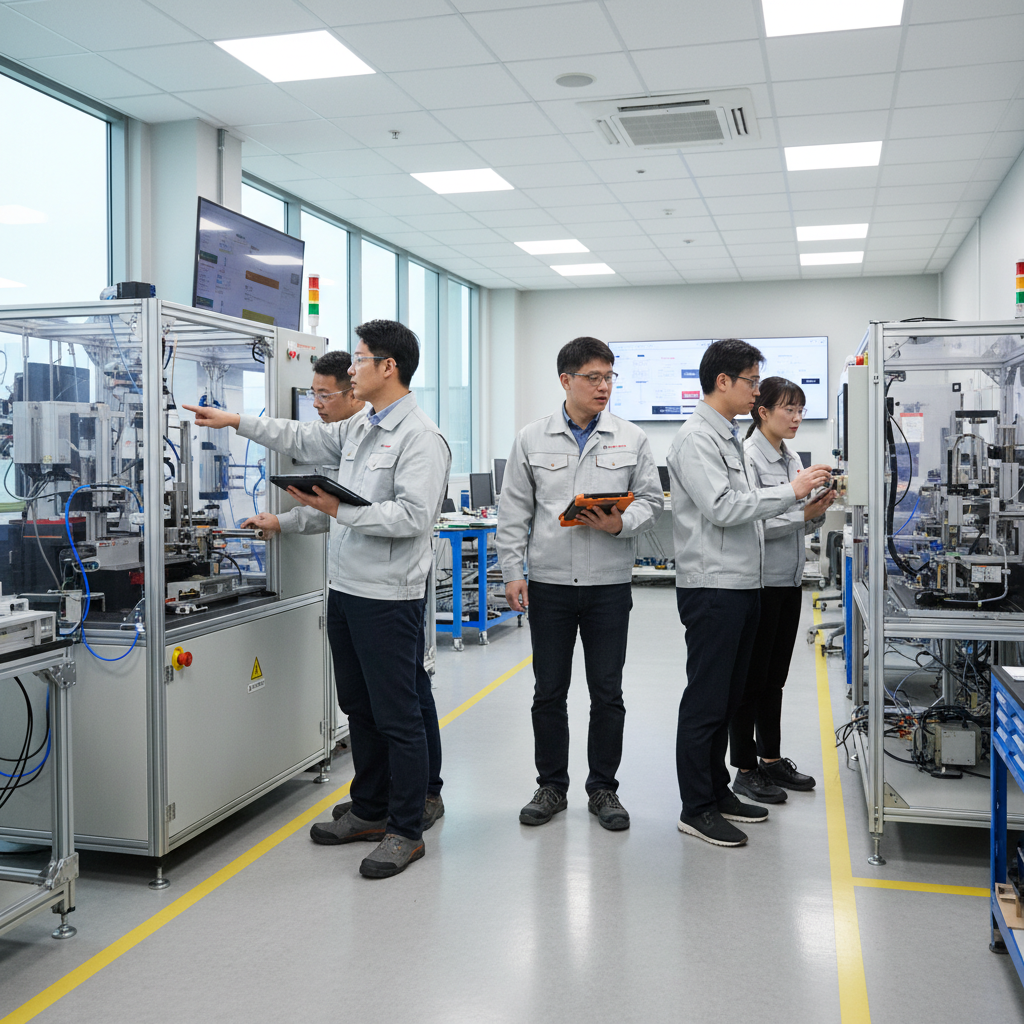
4. The role of the Living Lab model in elevating regional university – business cooperation
For universities, Living Lab serves as an operational framework to transform research into practical projects, especially for ESG challenges. Co-development with businesses and communities not only creates real-world case studies but also enhances the quality of training and expands cooperation opportunities.
In fact, in 2025, Vietnam National University, Ho Chi Minh City collaborated with 31 localities and over 200 businesses in training, research, and technology transfer activities – which facilitated innovation projects contributing to sustainable community development and strengthened the accountability of relevant stakeholders.
For businesses, Living Lab provides direct access to scientific expert resources and real-world testing environments. This enables businesses to co-develop solutions, reduce implementation risks, optimize R&D costs, and shorten the commercialization process through iterative testing.
For governments and communities, this model creates a platform to address sustainable development issues based on real needs. Policies become more flexible, while increasing transparency and stakeholder participation in the implementation process.

5. Conclusion: From formal cooperation to a strategic investment channel for innovation
The current barrier is not a lack of resources, but a lack of effective and long-term cooperation mechanisms. This causes businesses to miss out on innovation opportunities, while the value from university experts has not been adequately exploited.
To change this, a model is needed that allows co-development, testing in real environments, and clear measurement of results. Only then can university – business cooperation truly become a strategic investment channel for sustainable innovation.
Instead of stopping at short-term connections, Mekonglink helps businesses work directly with university experts in a real environment through the ESG Living Lab model – where ideas are tested, measured, and developed into deployable and scalable solutions.
👉 Connect with Mekonglink now to start building a collaborative ecosystem that creates real value, and transform academic resources into a long-term competitive advantage for your business.
>>> Learn more about our ESG Living Lab model here!
—-

☎️ Contact information:
1. Email: Community@mekonglink.asia
2. Website: mekonglink.asia
3. International phone: (+84) 02888868685
4. Vietnam phone: (+84) 364689922 (+84) 364689911


Responses